What the 14-hour tour day looks like, which monasteries you go inside, and the cash entrance fees to bring for the doors.
Tickets and tours
How to book Meteora
Meteora Monasteries and Caves Full-Day Trip from Athens
★ 4.7 (687)
A full guided day: return coach from Athens, all six clifftop monasteries seen, stairs climbed into three or four active ones including Grand Meteoron and Varlaam.
Includes:
Return coach transfer, guide included
Entry into 3-4 active monasteries (cash fees on site)
Meteora day trip from Athens: a 14-hour day, six monasteries seen, three or four entered
A Meteora day trip from Athens is the longest of the Athens day trips that still makes sense as a single day out, and its length is the first thing to plan around, well before you board the coach. The monasteries sit on sandstone pillars near Kalabaka in Thessaly, about four to four and a half hours from Athens each way, which means a tour built to fit the round trip into one day runs close to 14 hours door to door. What follows covers what that day looks like, which monasteries you go inside and which you only photograph from the road, and the cash entrance fees most people do not find out about until they are standing at the entrance.
The anchor product is Headout's guided full-day tour, from €69 down from a €98 list price, 4.7 rated from about 687 reviews, with free cancellation up to 24 hours before departure and a meal option that is worth adding.
Why monasteries on top of rock pillars
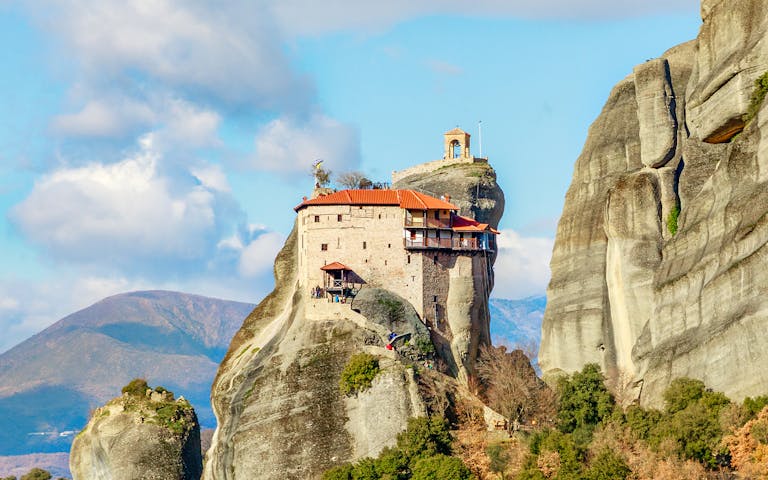
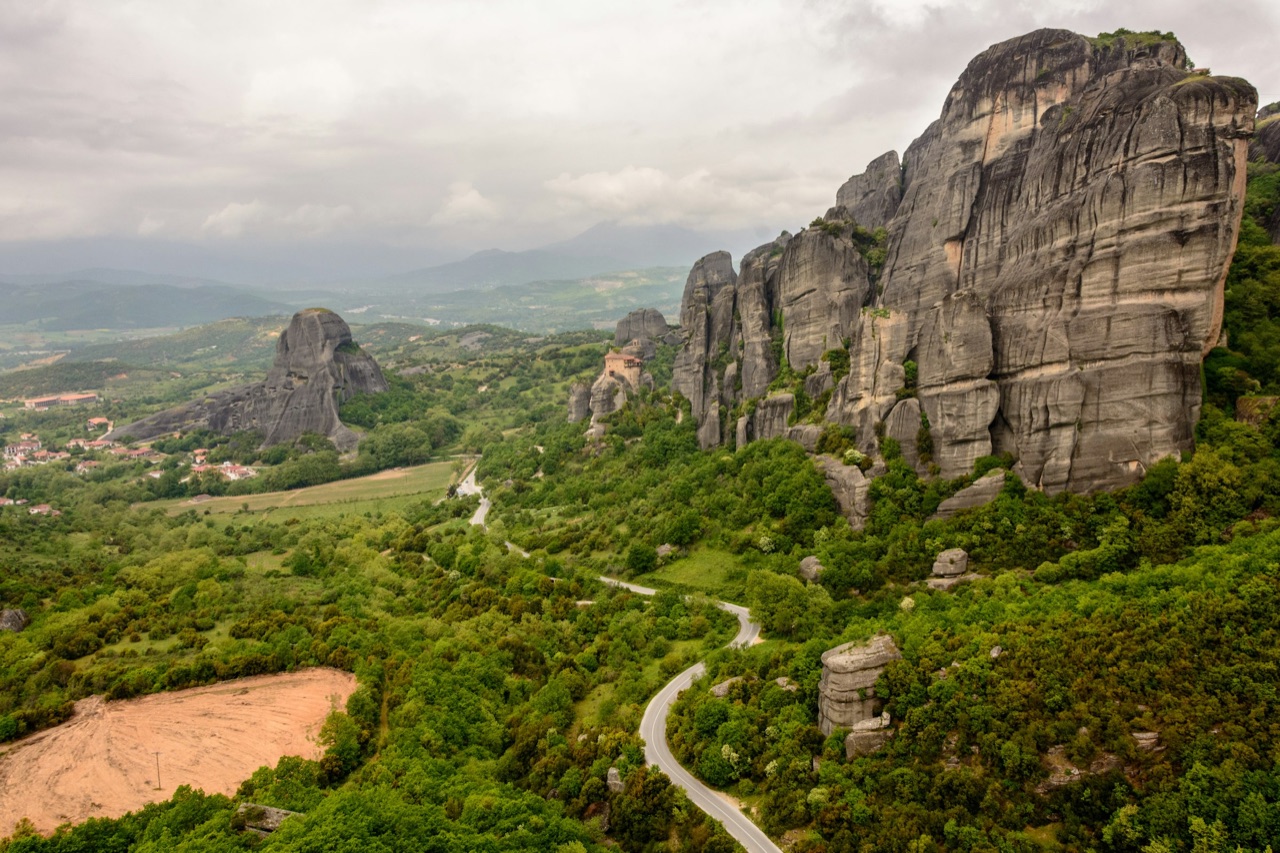
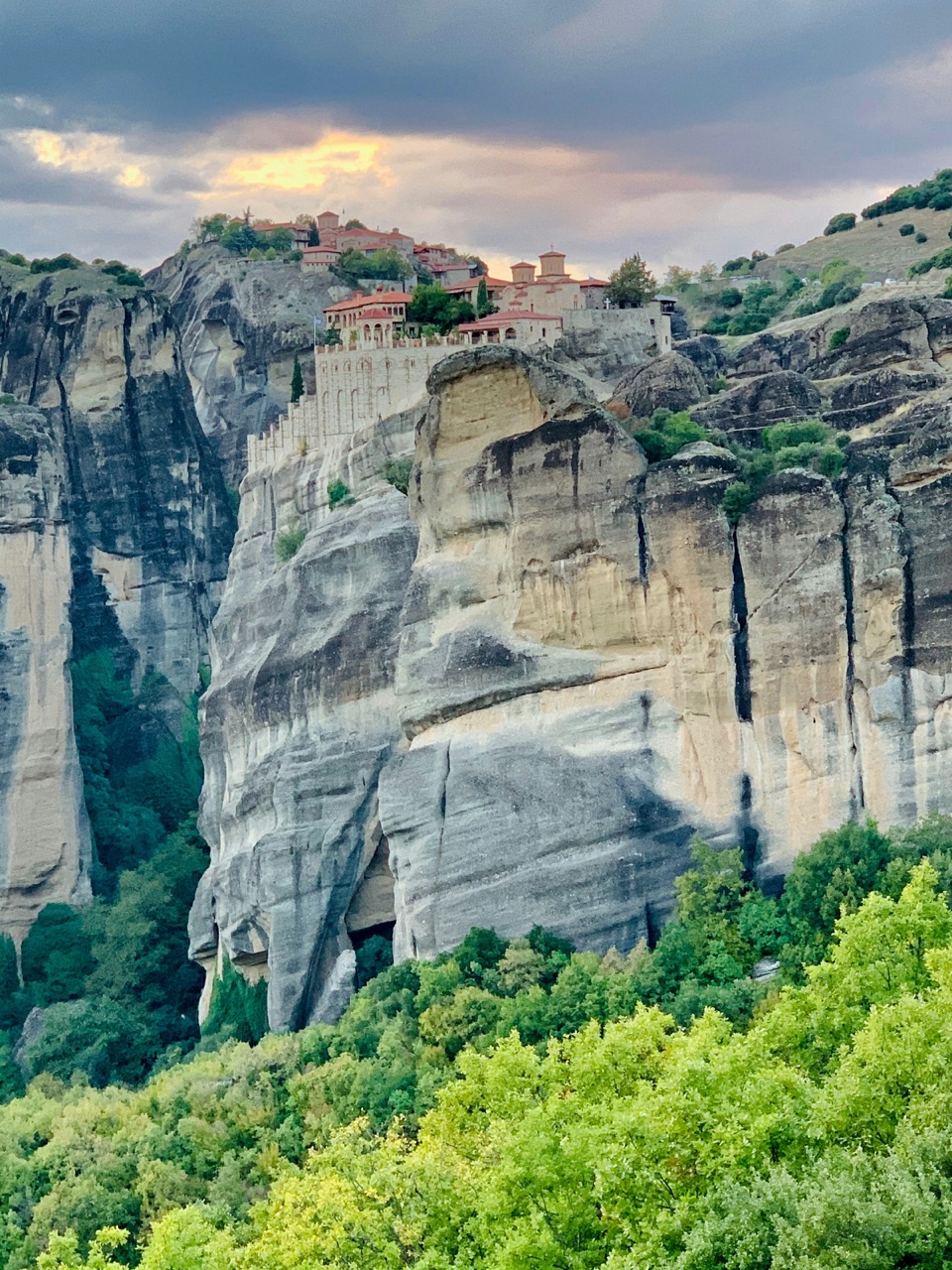
Meteora means "suspended in the air", and the name is literal: the monasteries sit on top of natural sandstone pillars, some rising over 300 metres, formed by millions of years of erosion. Hermit monks began settling in caves and crevices in these rocks from around the 11th century, drawn by the same isolation that makes the site dramatic to look at today, and organised monastic communities followed from the 14th century onward, building on the pillar tops specifically because the height made the sites near-impossible to reach without cooperation from the monks themselves. For centuries the only way up was a removable wooden ladder or a net hoisted by rope and windlass, a system deliberately kept fragile so a community could cut off access entirely if threatened. Steps and paths were only cut into the rock in the 1920s, which is why you reach every monastery today on foot by stairs; the net baskets in some older photographs are no longer the way up.
Of the original much larger number of monastic communities on these rocks, only six remain active today, inhabited by monks in some cases and nuns in others, and the site holds UNESCO World Heritage status for the combination of the natural rock formations and the surviving Byzantine monastic architecture together.
What is included
The tour is a return coach transfer in an air-conditioned bus, a guide for the day, and a route that passes all six of Meteora's remaining active monasteries, with stone stairs climbed into three or four of them. Grand Meteoron, the oldest and largest, and Varlaam, home to a 12,000-litre rainwater cistern still in daily use, are the two named specifically by the operator; which others get added depends on the day's schedule and the weekly closures each monastery keeps on its own calendar. A short walk to the Badovas hermit caves, where monks once lived in rock shelters reached by rope and ladder, is part of the route. A meal option is available to add; without it, lunch is on you at a stop along the way.
What is not included, and worth knowing before you go: monastery entrance fees. Each monastery you enter charges its own small fee, paid in cash at each monastery rather than folded into the tour price or bought online in advance. Bring small euro notes and coins with you from Athens; a monastery gate is not the place to discover your only cash is a single large note.
Photo: Ricardo Frantz / Unsplash
Itinerary and timing
Expect an early start, well before 8am, to make the four-hour-plus drive north and still leave a reasonable window at Meteora before the return leg. Several reviewers call it a long day at an unhurried pace: the guide narrates the drive, there is time at each monastery, and the return arrives back in Athens late in the evening. Nothing else fits into the same day, so budget the whole day for it and plan a quiet evening on either side.
Because the monasteries are independent religious institutions rather than a single state-run archaeological site, there is no one official hours page the way there is for the Acropolis. Each keeps its own weekly closed day and its own summer and winter hours, commonly somewhere around 09:00 to 16:00 or 17:00 in summer and shorter in winter, with all six typically open on weekends and one or two closed on any given weekday. A guided tour handles this scheduling for you; if you were planning a self-drive visit instead, check each monastery's current day and hours close to your date, especially around Orthodox Easter when schedules commonly shift.
Getting there without the tour
Meteora is reachable by train or self-drive from Athens, with the train to Kalabaka running around four to five hours and requiring a change, plus local transport on to the monasteries themselves once you arrive, since they sit outside the town. Doing it independently in a single day from Athens is a stretch even with a car, given the driving time alone; most independent visitors who are not on a tour stay at least one night near Kalabaka rather than attempting the full round trip in a day. Either way it is a demanding single day, and the guided day trip takes on the drive and the logistics of getting between monasteries once you arrive.
A self-drive visit also puts the monastery-hours research on you directly, since there is no single published timetable to check the way there is for a state-run site. Working out which of the six monasteries are open on your specific date, driving between them on narrow local roads, and finding parking near each one are all part of the independent version of this trip. None of it is difficult, but a guided tour absorbs all of that planning, and that belongs in the comparison with the fare as much as the coach seat does.
Is it worth it?
If you want to go inside the monasteries, yes: seeing three or four from the inside, with a guide who explains how a working monastic community on a cliff top runs, is a different experience from photographing them from the valley road. If a long coach day sounds like more travel than sightseeing, it is worth reconsidering: five to six of the fourteen hours are spent in transit, and the return leg comes at the end of a full day.
The alternative to weigh it against is an overnight stay. Meteora is one of the more distinctive landscapes in Greece and looks nothing like the temples and museums Athens already offers, so the useful question is whether a 14-hour coach day is how you want to see it, or whether you would prefer to stay overnight near Kalabaka and see it at a slower pace. Reviewers who rate the tour highly consistently mention the guide and the views; the coach ride itself is not what they praise. The tour trades one long day for not having to plan an overnight stay two cities away from Athens.
Tips
Dress code applies inside every monastery. Shoulders and knees covered for everyone; some monasteries provide wrap skirts for visitors in shorts, but do not count on it and dress modestly from the start.
Carry small cash. Entrance fees are paid in cash at each monastery you enter, and change for large notes is not always available.
Wear proper shoes. Stone stairs, uneven paths and, for some travellers with mobility difficulties, limited accessibility are all part of the visit; there is no lift up to a monastery built into a cliff.
Book the meal option if you would rather not manage lunch yourself. On a 14-hour day with a fixed group schedule, sourcing your own food adds a layer of logistics you may not want.
Photo: Janette Speyer / Unsplash
How to book, in four steps
Clear the whole day. Nothing else in Athens fits around it, so treat it as its own day, start to finish.
Add the meal option if you want lunch handled. Otherwise budget time and cash for a stop along the way.
Book with free cancellation. The tour cancels free up to 24 hours before departure, so hold a date before your Athens plans are fully fixed.
Bring cash for the monasteries you enter. Small euro notes: the fees are cash, and change for a large bill is not always available.
Combine it with
Meteora is the longest of the Athens day trips by a wide margin; if a shorter half-day trip fits your schedule better, the Cape Sounion sunset tour covers similar ground in a fraction of the time. For a full but less demanding day out of the city, the Delphi day trip runs closer to ten hours rather than fourteen, with a single ancient site rather than a multi-monastery route. Either way, a Meteora day trip is the one to book first if the rock-top monasteries are the image that made you want to see Greece in the first place.
About 14 hours door to door on the Headout guided tour, since the drive alone is roughly 4 to 4.5 hours each way. Plan it as a full day on its own.
How many Meteora monasteries do you actually visit?+
The tour passes all six remaining active monasteries but climbs the stairs into only 3 to 4 of them, always including Grand Meteoron and Varlaam. Which others depends on the day's schedule and each monastery's own weekly closed day.
Do you pay to enter the Meteora monasteries?+
Yes, separately from the tour price. Each monastery you enter charges its own small fee, paid in cash at the monastery and not included in the booking, so carry small notes and coins.
Is there a dress code for the Meteora monasteries?+
Yes. Shoulders and knees covered for everyone. Some monasteries lend wrap skirts to visitors in shorts, but do not rely on it; dress modestly before you arrive.
Can you visit Meteora from Athens without a tour?+
Yes, by train (around 4 to 5 hours to Kalabaka, with a change) or by driving yourself, but a single-day round trip from Athens is a stretch even with a car. Most independent visitors stay at least one night near Kalabaka.
Are the Meteora monasteries accessible for visitors with limited mobility?+
Not fully. The monasteries are built on cliff-top rock formations, reached by stone stairs with no lift, and several travellers have noted they are less accessible for anyone who has difficulty walking.
Fourteen hours, six clifftop monasteries.
Clear the whole day, bring small cash for the monastery doors, and book with free cancellation while your Athens dates are still moving.