Acropolis & Parthenon Guided Tour with Skip-the-Line Entry
★ 4.5 (9,110)
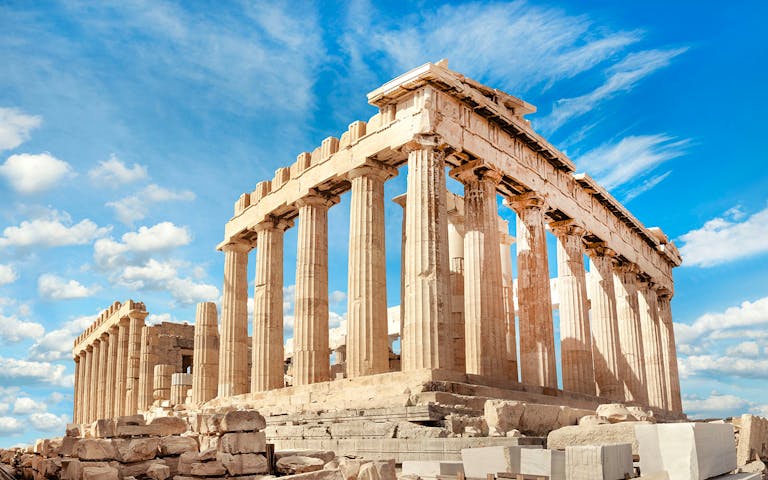
Two hours on the rock in a small group with a live guide, timed entry included. The one to take on a first visit: the Acropolis has almost no signage, so without a guide the Erechtheion is a handsome porch and nothing more.
The plain ticket with a booked slot and an app audio guide. The right buy for an 08:00 climb before the tour groups arrive, or for a second visit when you already know what you are looking at.
Acropolis Museum Skip-the-Line Ticket with Optional Audio Guide
★ 4.5 (10,831)
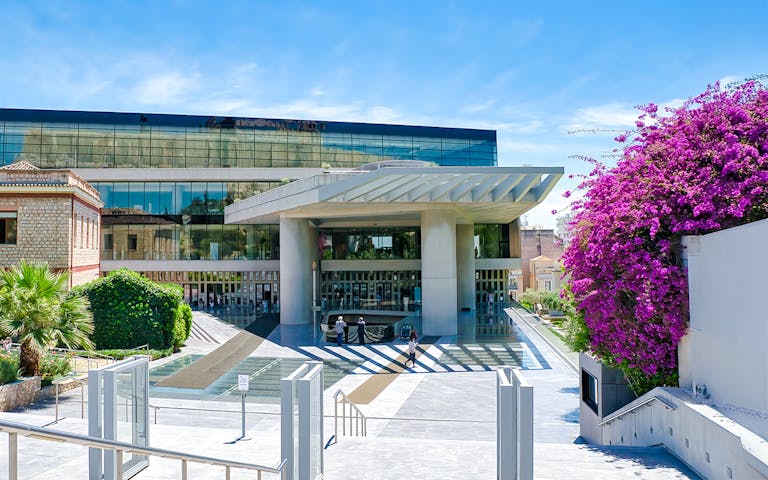
The plain ticket with a booked slot: straight in through the e-ticket entrance, then round the galleries at your own pace. An optional audio guide in several languages runs on your phone.
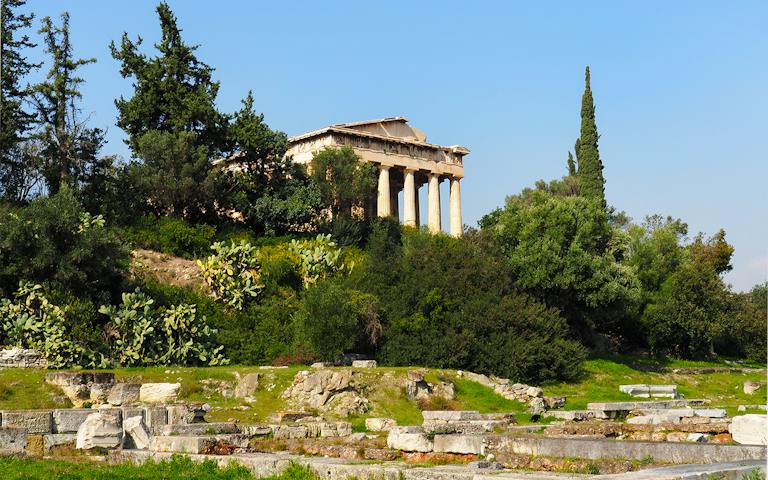
Entry to the site and the Agora Museum with an audio guide, self-paced. The cheapest way to have the place explained, and the Temple of Hephaistos is included at no extra charge.
We may earn a commission when you book through these links, at no extra cost to you.
National Historical Museum Athens: the 1821 Revolution, in the hall where the Greek parliament sat
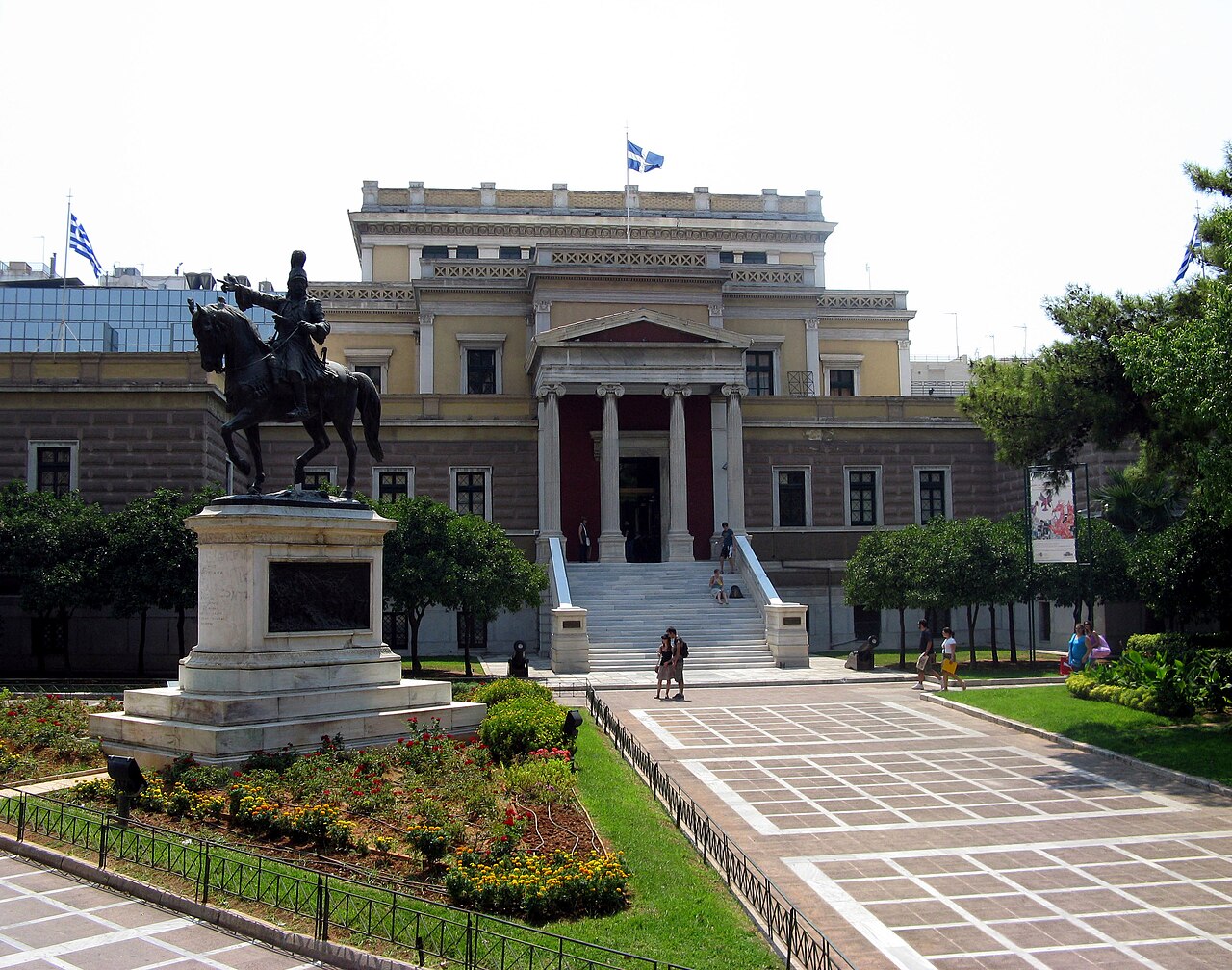
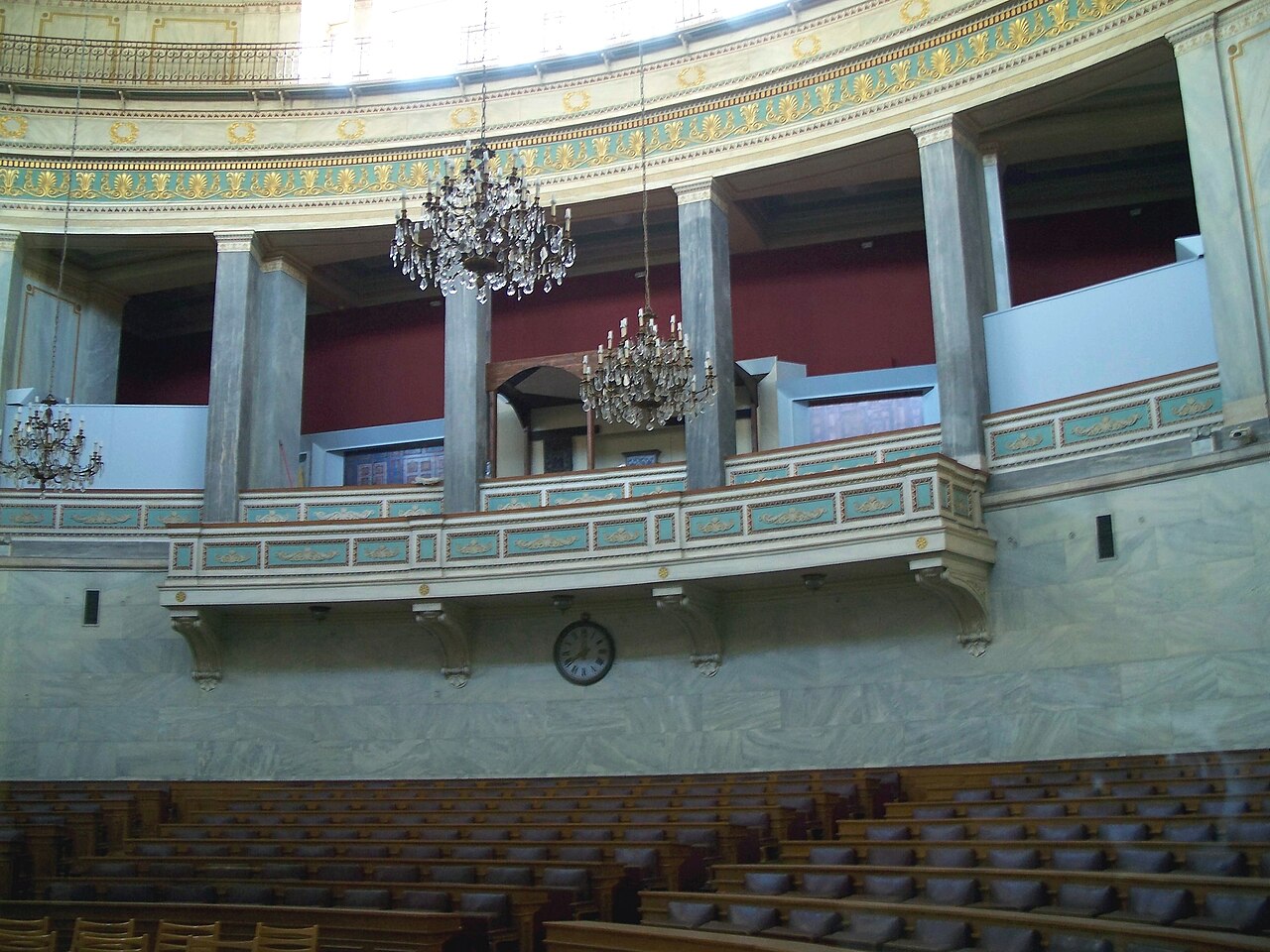
The National Historical Museum charges separately for the permanent exhibition and for the combined ticket with the temporary show. What that buys is the Old Parliament Building itself: you walk up the steps on Stadiou Street past the Kolokotronis statue into the hall where the Greek parliament sat from 1875 to 1935, and the collection of the 1821 War of Independence is arranged around it.
What you pay for is two things at once. The first is the building: the Old Parliament House, founded in 1858 and the seat of the Greek parliament from 1875 to 1935, which has housed the museum since 1960. The second is the permanent exhibition of the Historical and Ethnological Society of Greece, laid out as a sequence of numbered rooms and corridors from the Fall of Byzantium in 1453 to the Greek-Italian War of 1940-41, with the Revolution of 1821 as its centre of gravity. Keep it separate in your plans from the National Archaeological Museum and the Museum of Modern Greek Culture, which are different museums with their own pages on this site.
Guided tour or plain ticket?
Plain ticket, because it is the only kind. No partner sells a guided tour of the National Historical Museum, and the tours GetYourGuide lists on its location page for the museum are general Athens walks and drives that pass the Old Parliament building in transit rather than take you inside. One is a Hydra day tour that stops at the museum's Lazaros Koundouriotis Mansion branch on the island, which is a different visit altogether. Headout has nothing. So the decision here is between the permanent exhibition alone and permanent plus temporary.
The general ticket covers the permanent exhibition, which is the whole historical sequence from Corridor 1 to Room 19, plus the Central Corridor. It does not cover the temporary exhibition, which is either a separate ticket or, more sensibly, the combined one. If a temporary show is running that interests you, the combined ticket costs less than buying the two separately. If not, the general ticket is all there is to consider.
The collection suits a self-guided visit. The rooms run in chronological order, each with its period in the title, and the strongest objects need no decoding: a throne, a ship's figurehead, a wall of firearms that belonged to named fighters. If you want the 1821 Revolution explained by a person, you will have to bring your own reading. Nothing on the museum's site advertises an audio guide, and we will not claim one exists.
Tickets and prices
National Historical Museum Athens prices below are the museum's own published admission as of September 2026. There are no partner prices to set against them, because there are no partner products. The reduced rate applies to visitors aged 65 and over, students, and members of groups of 15 or more people.
The family ticket is the bargain. The family rate admits two adults and three children for less than two adult tickets, and a slightly higher one covers the temporary show as well. The museum's page does not state an age limit for the children, so ask on arrival if yours are teenagers.
Free admission runs on a short list that the museum publishes itself. The museum belongs to a private society, not the Ministry of Culture, so the Ministry's free-days calendar does not automatically apply here. The museum's own list is: the first Sunday of the month from November to February, 25 March, 18 May and 28 October. It lines up with most of the state list, so if you are already planning a free-day sweep of the archaeological sites on 25 March or 28 October, this museum can be part of it. On every other day, €10.
Photo: Юкатан / Wikimedia Commons
Opening hours and best time to visit
National Historical Museum Athens hours run on two timetables. From September to June it opens Tuesday to Friday 09:00 to 16:00 and Saturday and Sunday 10:00 to 16:00. In July and August it opens Tuesday to Sunday 10:00 to 16:00. Last admission is 15:30 all year, and the museum shop keeps its own hours, Tuesday to Sunday 09:00 to 16:00. The museum is closed every Monday, and on 25 and 26 December, 1 and 6 January, Easter Sunday, 1 May and 15 August.
Monday is the trap. If Monday is the day you have set aside for the Syntagma end of town, move this museum to another day. The other trap is the afternoon: a 16:00 close with a 15:30 last admission is early, and a visitor who arrives at 15:00 expecting a full circuit of nineteen rooms will be hurried out. Come in the morning.
The best slot, by our reckoning, is a weekday at 09:00 between September and June, when the doors open an hour earlier than at weekends. A busy day means fuller rooms rather than a wait to get in.
How long to allow: the museum publishes no figure, and the only duration we have seen online is GetYourGuide's aggregate for the unrelated tours on its location page, which says nothing about the museum itself. Our own recommendation is to give it about an hour and a half if you read the room panels and take the Central Corridor and Room 14 slowly, less if the 1821 rooms are your only interest.
Getting there
The address is Old Parliament Building, 13 Stadiou Street, Kolokotroni Square, 10561 Athens. The museum's phone number is 210-3237617. The building stands on the square named after the general whose statue dominates it. The bronze equestrian Theodoros Kolokotronis, commander-in-chief of the 1821 Revolution, by the sculptor Lazaros Sochos, has stood in its current spot since 1954, and marble statues of two 19th-century politicians, Charilaos Trikoupis by Thomas Thomopoulos (1920) and Theodoros Diligiannis by Georgios Dimitriadis (1931), were moved to their places around the building in the same year. Diligiannis was murdered on the building's steps in 1905, a detail the museum's own building page mentions in passing.
The National Historical Museum Athens site does not publish a nearest metro station or a walking time, so what follows is our estimate from the map. Stadiou Street runs between Syntagma and Panepistimio stations, and the building sits between the two, about 300 metres from either, call it a few minutes on foot from whichever you use.
The nearest museum in our inventory is the Numismatic Museum, a short walk away at the Syntagma end of town. The two make an easy pair for a morning that stays within a few streets of the square, and neither needs a booked ticket.
What to see: highlights
The Old Parliament House itself. Queen Amalia founded the building in 1858 to house the Parliament and the Senate, to a design by the French architect Francois Boulanger. After King Otto's removal the Senate was abolished, the architect Panagiotis Kalkos modified the design, and the building was completed in 1875. The Assembly officially opened on 11 August 1875 under Prime Minister Charilaos Trikoupis. Parliament sat here for 60 years, until it moved to the Former Palace on Syntagma Square in 1935. Prime Minister Eleftherios Venizelos gave the building to the Historical and Ethnological Society to establish the museum. The Society settled in 1960 and opened the new exhibition to the public in 1962.
The Central Corridor. The figurehead of the corvette Karteria, the first steamship in the service of the Greek state during the 1821 Revolution, and a copy of Eugene Delacroix's painting of the Chios massacre, with weapons of the War of Independence and busts of 19th-century kings and politicians at the entrance. It is the museum's overture.
Room 5, Weapons of the Struggle. The kariofili long firearm, the kubura pistol, the pala sabre and the curved yatagan cutlass, with cartridge pouches, powder moulds and portraits of well-known 1821 fighters on the walls. Most of the weapons on display belonged to named fighters of the war, which is what lifts this room above a case of antique guns. The museum says most came as loot or as philhellenic donations.
Rooms 4, 7 and 9: the Revolution on land and at sea. Room 4 covers the Greek War of Independence of 1821 to 1827. Corridor 7 takes the set-piece events, the Siege of Messolonghi and the naval battle of Navarino. Room 9 is the Naval Struggle of 1821. Corridor 8, on Philhellenism, explains why a Delacroix hangs in the hall.
Room 10, Foundation of the Modern Greek State. Ioannis Kapodistrias as first Governor of Greece from 1828 to 1831 and his assassination in 1831, the arrival of King Otto in 1833, and the bloodless revolution of 1843 that forced a constitution. This is the room that explains why a parliament building exists at all.
Room 14, the throne. The throne used by King Otto (1833 to 1862) and later by George I (1863 to 1913) in the Throne Room of the Palace of Athens, with a crimson velvet curtain and carved gilded finials. Around it, the office of King George I, royal wedding crowns and 19th-century formal costumes, one of them belonging to Ioannis Gennadius, Greek ambassador to Britain.
The sequence continues past 1821. Room 11 covers the consolidation of the parliamentary system and territorial expansion, Room 12 the Balkan Wars of 1912-13 and the First World War, and Corridor 13 the Second World War, where the historical sequence ends with the Greek-Italian War of 1940-41. Rooms 15 to 19 change register: the Folk Art Collection, costume rooms arranged by garment (the kavadi, sigouni, saya and anteri, the dress and the skirt), and a room on aspects of urban society in the 19th century. The early rooms set the story up: Corridor 1 on the Fall of Byzantium in 1453, Room 2 on Latin and Ottoman rule from the 13th to the 18th century, Room 3 on the awakening of national conscience from 1670 to 1821, and a room on Greek scholars in the West in the 14th and 15th centuries.
Photo: Badseed / Wikimedia Commons
Tips before you go
The National Historical Museum Athens visitor pages say nothing about bags, photography, pushchairs or step-free access, and we will not guess. If any of those matter to your visit, phone 210-3237617 before you go. The building was completed in 1875 for a parliament, not for visitors, so the question is a fair one. What we can say is that the shop is open Tuesday to Sunday, 09:00 to 16:00, and that admission stops at 15:30.
The museum also runs two houses on Hydra, the Lazaros Koundouriotis Historical Mansion and the Tetsis Home and Studio, open from 25 March to 31 October, 10:00 to 16:00. They are separate visits and are not covered by an Athens ticket. If you take a day trip to the island, the Koundouriotis mansion is the branch that the GetYourGuide Hydra tour stops at.
The museum's roots run back before the building. The Historical and Ethnological Society of Greece was founded in 1882, made its first major public appearance with the Exhibition of Memorials of the Sacred Struggle in 1884, and spent over half a century in the halls of the Athens Polytechnic before the move to Stadiou Street. The permanent exhibition it built covers the history of Modern Greece from Ottoman and Latin rule, through the War of Independence and the creation of the independent state, to contemporary times.
One plan: arrive at 09:00 on a weekday between September and June, or at 10:00 at any other time. Take the combined ticket if a temporary show is on, and bring ID if you are 65 or over or a student. Start in the Central Corridor with the Karteria figurehead and the Delacroix copy, follow the rooms in order from Corridor 1, give Room 5 and Room 14 the most time, and finish with the folk costumes in Rooms 15 to 19. Step out on to the square, look up at Kolokotronis, and you are, by our estimate, a few minutes from Syntagma. The whole visit is done well before the 16:00 close.
How to book, in four steps
Do not look for an online ticket. There is none: no Headout listing, no GetYourGuide entry ticket, no place in the Turbopass City Pass or the Flex Pass. If a pass is already in your plans for the Acropolis, buy it for the Acropolis and budget €10 here on top.
Pick a day that is not Monday. Any Tuesday to Sunday outside the holiday closures, with a morning arrival. If you are in Athens on 25 March, 18 May or 28 October, or on a first Sunday between November and February, the door is free.
Choose between the permanent exhibition and the combined ticket. Permanent only, or combined if the temporary exhibition interests you, with a family rate for two adults and three children. Bring ID for the reduced rate.
Pair it with a neighbour. The Numismatic Museum is a short walk away and Syntagma Square is a few minutes off by our estimate, so the museum slots into any morning spent at that end of town.
Nearby and combinations
National Historical Museum Athens is one of the few entries on this site with no pass to weigh, because neither Athens pass includes it. Our Athens City Pass guide sets out what the Turbopass City Pass and the GetYourGuide Flex Pass do cover and when they beat single tickets. If you are buying one for the Acropolis and the Acropolis Museum, that is fine, but the €10 here is on top and there is no way round it.
The closest neighbour is the Numismatic Museum, covered on its own page, and the Old Parliament House sits a few minutes by our estimate from Syntagma Square, so the natural combination is a morning at this end of Stadiou Street. The two sit ten minutes apart.
For the wider picture, our Best museums in Athens guide ranks the city's collections and suggests which sit well together in a day. If the 1821 rooms are what hold you, the Museum of Modern Greek Culture continues the story of everyday life in the same centuries. The National Archaeological Museum, which visitors sometimes confuse with this one, covers antiquity rather than the years this building tells and is a separate page as well.
How much is the National Historical Museum in Athens?+
The permanent exhibition and the combined ticket with the temporary show are priced separately, and there is a family rate covering two adults and three children. The reduced rate applies to over-65s, students and groups of 15 or more.
What are the National Historical Museum opening hours?+
From September to June it opens 09:00 to 16:00 Tuesday to Friday and 10:00 to 16:00 at weekends. In July and August it runs 10:00 to 16:00 Tuesday to Sunday. Last admission is 15:30 and the museum closes on Mondays.
What is in the National Historical Museum?+
Modern Greek history, above all the 1821 War of Independence. The central corridor holds the figurehead of the corvette Karteria, the first steamship in Greek state service, Room 5 shows the weapons of named fighters of the struggle, and Room 14 has the throne used by King Otto and later King George I.
Where is the National Historical Museum?+
In the Old Parliament Building at 13 Stadiou Street on Kolokotroni Square, a few minutes' walk from Syntagma. The building itself is part of the visit: it housed the Greek parliament from 1875 to 1935, and the old assembly hall is preserved.
Is the National Historical Museum free on any day?+
Yes, on its own list rather than the Ministry's: the first Sunday of the month from November to February, plus 25 March, 18 May and 28 October. 25 March is Greek Independence Day, which makes it the most fitting free day of the four.
Is the National Historical Museum worth visiting?+
If you want the story that follows the antiquities. Athens museums overwhelmingly cover the ancient city. This one covers the fight that produced the modern state, in the building where that state's parliament sat. An hour to ninety minutes is enough.
Every ticket in Athens, compared once.
18 museums and sites, plus day trips to Delphi, Meteora and beyond. Book in under a minute with free cancellation and instant confirmation.
 Bestseller