Acropolis & Parthenon Guided Tour with Skip-the-Line Entry
★ 4.5 (9,110)
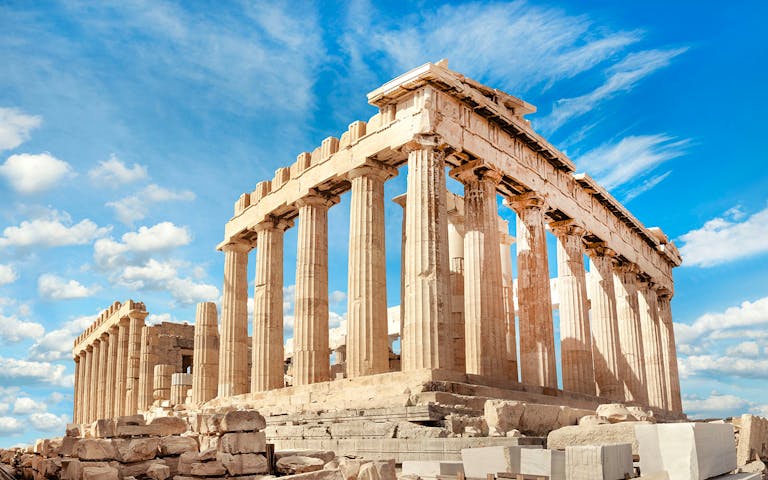
Two hours on the rock in a small group with a live guide, timed entry included. The one to take on a first visit: the Acropolis has almost no signage, so without a guide the Erechtheion is a handsome porch and nothing more.
The plain ticket with a booked slot and an app audio guide. The right buy for an 08:00 climb before the tour groups arrive, or for a second visit when you already know what you are looking at.
Acropolis Museum Skip-the-Line Ticket with Optional Audio Guide
★ 4.5 (10,831)
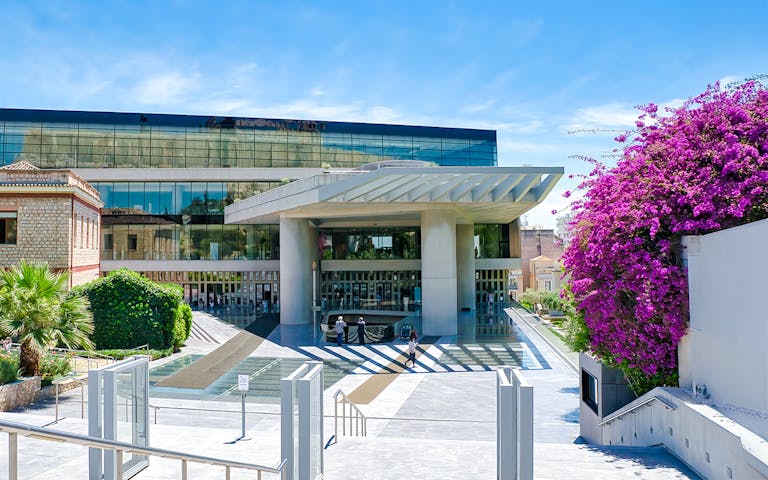
The plain ticket with a booked slot: straight in through the e-ticket entrance, then round the galleries at your own pace. An optional audio guide in several languages runs on your phone.
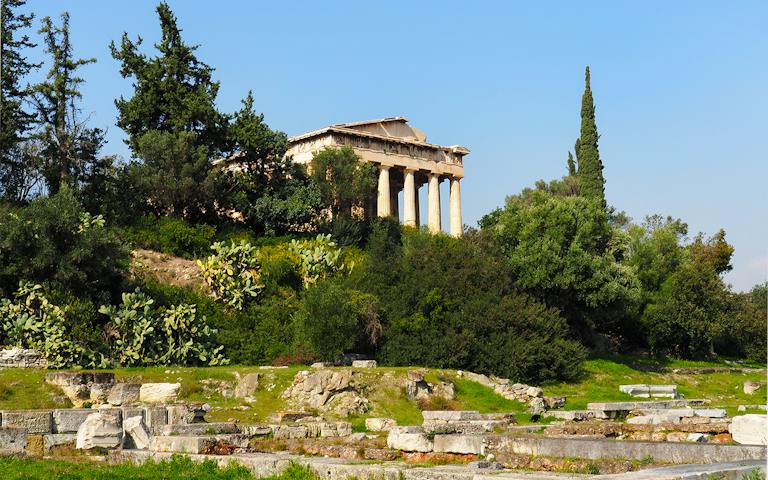
Entry to the site and the Agora Museum with an audio guide, self-paced. The cheapest way to have the place explained, and the Temple of Hephaistos is included at no extra charge.
We may earn a commission when you book through these links, at no extra cost to you.
Byzantine Museum Athens: icons, mosaics and the quietest garden five minutes from the Acropolis Museum
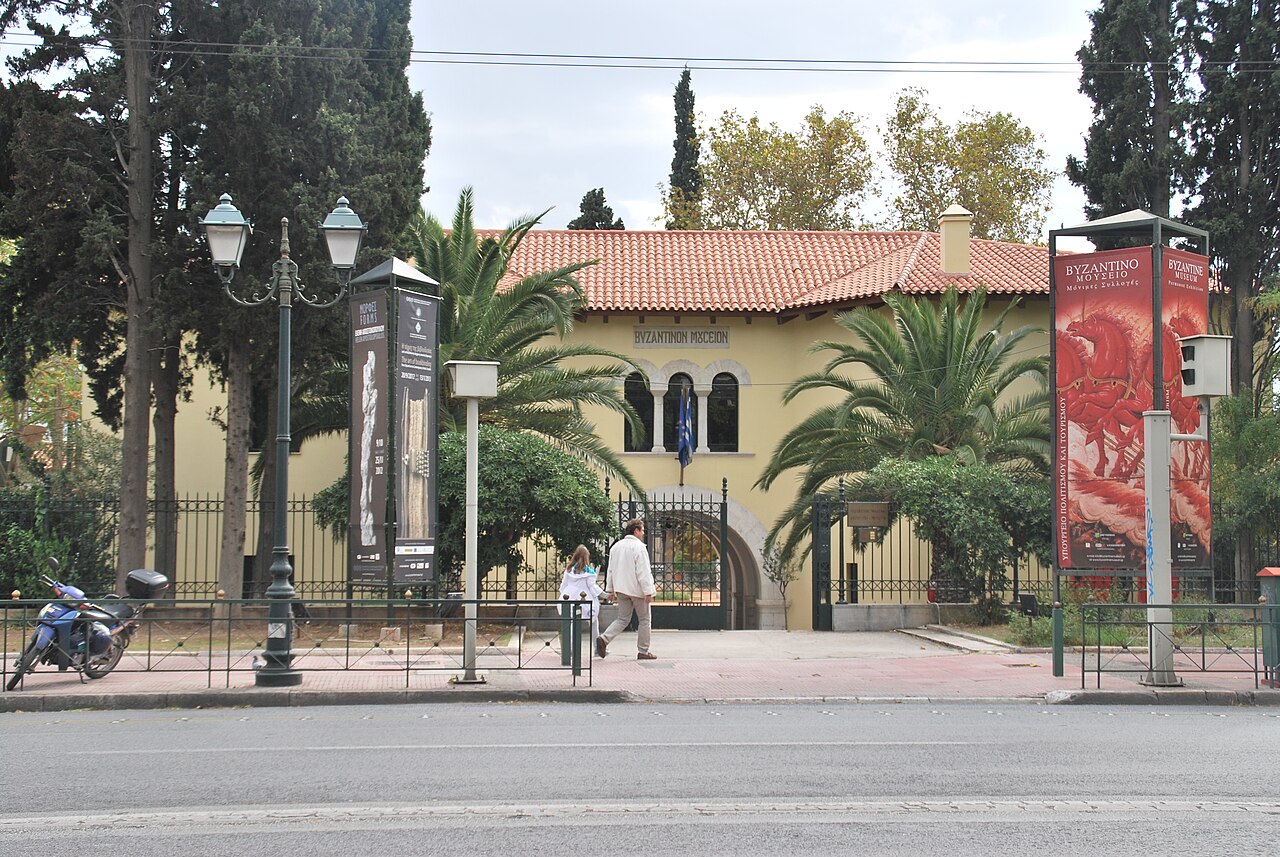
The Byzantine and Christian Museum sits back from Vasilissis Sofias Avenue in the gardens of the Villa Ilissia. The one GetYourGuide listing we had been tracking for this museum, a private driver tour that stopped here for an hour, no longer resolves to a live product page, and no other partner ticket has replaced it. No Athens pass includes this museum, so for once there is nothing to pre-book online: the door is the only route in. What remains is whether two hours here are well spent, and they are if the Acropolis has left you wondering what happened to Athens in the fifteen centuries after the temples closed.
Come on a weekday morning, allow about two hours, go straight to the Mytilene treasure and the Episkopi frescoes, and finish in the garden cafe below the Duchess of Plaisance's villa.
Guided tour or plain ticket?
There is no guided tour to compare here, and currently no bookable ticket either, from either of our booking partners. Headout does not list the Byzantine and Christian Museum among its Athens museums at all, and the one GetYourGuide product that used to include an hour here now redirects to GetYourGuide's generic homepage instead of a working listing. None of the Athens city passes lists it either, so admission is paid at the museum.
What the ticket covers: the whole permanent exhibition, underground beneath the Villa Ilissia, in its five chapters from the late Roman world to twentieth-century art. What it does not cover: an audio guide or a live guide, because our partners currently sell neither for this museum, and any promise about the gardens and the cafe, which the museum's own site does not tie to a ticket either way. If a Headout or GetYourGuide ticket appears here in future, we will update this page.
Tickets and prices
Byzantine Museum Athens prices below are the museum's own published figures as of September 2026.
Entry is free for children and young people up to 25 from EU member states, for children up to 18 from outside the EU, and for visitors with disabilities together with the person accompanying a blind or mobility-impaired visitor. Bring an ID card or passport, because the museum asks for one. Two adults with two teenagers pay €16 in total, and an EU student pays nothing.
The free days follow the Ministry's calendar for state museums. The museum's own page currently lists 6 March, 18 April, 18 May, the last weekend of September, 28 October, and, from 1 November to 31 March, the first and the third Sunday of every month. Two of the Ministry's pages still show only the first Sunday, so treat the third Sunday as a bonus rather than a plan. Our Free museum days in Athens guide has the full list across the city. Note that 25 March and 1 May, free days at some sites, are closures here.
If the National Archaeological Museum is on your list anyway, the three-day package covers it, this museum and the two smaller state collections for three days, which is hard to beat with single tickets. The museum's site does not mention it, so ask at whichever of the four desks you reach first. No partner sells the package, and none of the Athens passes (the GetYourGuide City Pass, the Flex Pass, Headout's Turbopass and the MegaPass) lists the Byzantine and Christian Museum among its attractions, so a pass does not get you in here either.
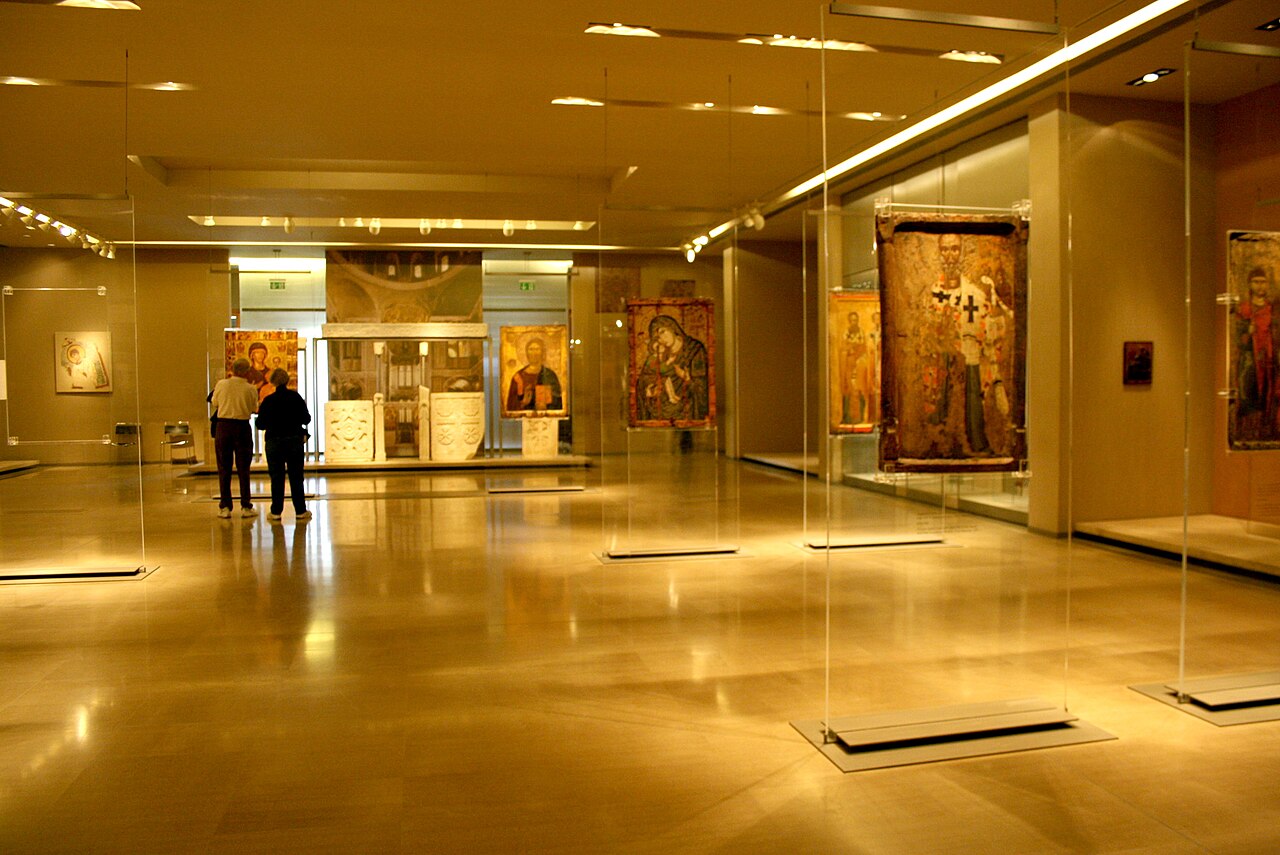
Photo: Marcus Cyron / Wikimedia Commons
Opening hours and best time to visit
The Byzantine Museum Athens opens Monday and Wednesday to Sunday from 08:30 to 15:30 and is closed every Tuesday. That timetable is the same in summer and winter: the Ministry's Directorate of Archaeological Museums lists 08:30 to 15:30 for both seasons, and the museum's own page agrees. Older Ministry listings still show an evening summer timetable to 20:00. It is not in force, so do not plan an evening visit. Visitors must leave the galleries 20 minutes before closing, which means the rooms clear at 15:10 and the last useful entry is around 14:00.
Holiday closures are 1 January, 25 March, 1 May, Orthodox Easter Sunday, and 25 and 26 December. On Orthodox Good Friday the museum opens late, from 12:00 to 17:00. The Loverdos Museum, the museum's annex with free entrance, keeps the same hours and the same Tuesday closure, and the museum library opens Monday to Friday from 09:30 to 15:30. The Ilissia cafe in the garden runs on a longer clock: Monday 08:30 to 19:00, Wednesday to Sunday 08:30 to 19:00, and Tuesday 10:00 to 18:00, the one day the galleries are shut.
The best slot is the first hour after 08:30 on any weekday except Tuesday, when the underground galleries are cool and nearly empty and you have the Mytilene silver to yourself. The museum sells no timed slots, so the hour you pick matters more than the day. Arriving at 13:00 after lunch leaves you 90 minutes, which is enough for the Byzantine half but not for both. Peak season changes little here, because the crowds heading for the Acropolis rarely come this far up the avenue. Winter Sunday mornings, when entry is free, are the one time you might find company.
How long to allow: the museum gives no figure, so any estimate, including ours, is unofficial. We suggest about two hours: one for the Byzantine chapters, half an hour for the post-Byzantine icons and printed books, and the rest for the villa and the garden.
Getting there
The Byzantine Museum Athens stands at 22 Vasilissis Sofias Avenue, postcode 10675, in the grounds of the Villa Ilissia. Evangelismos station on metro Line 3 is, in the museum's own words, just a few metres away, which makes this one of the simplest museums in Athens to reach by metro: one stop from Syntagma, and the exit brings you onto the avenue beside the gate. On foot it is a 15-minute walk from Syntagma Square along Vasilissis Sofias, the museum's official figure, past the Benaki and the Museum of Cycladic Art.
Buses and trolleybuses stop at Rigillis, right by the museum: bus lines 054, 100, 203, 204, 220, 221, 224, 235, 608, 622, 732, 815, X14, X95, A5 and E14, plus trolley 3 at Rigillis and trolley 10 at Ethniko Idryma Erevnon. From the Acropolis it is roughly 2.3 kilometres, about 30 to 35 minutes on foot via Syntagma by our own map estimate, or a short metro hop: Akropoli on Line 2 to Syntagma, change to Line 3, one stop to Evangelismos. There is one parking space reserved for disabled visitors and otherwise no car park, so do not drive.
The neighbours are the reason to plan a whole day on this avenue. The Museum of Cycladic Art is four minutes on foot back towards Syntagma, the National Gallery of Greece is five minutes the other way, the Benaki Museum's main building is ten minutes, and the Goulandris Foundation is ten minutes into Pangrati.
What to see: highlights
The Byzantine Museum Athens collection holds more than 25,000 objects from the third to the twentieth century AD, of which the permanent exhibition shows about 1,200 in its Byzantine half, covering the fourth to the fifteenth century, and about 1,500 in the half called From Byzantium to Modern Era. The museum's own site divides the whole into five chapters: From the Ancient World to Byzantium, The Byzantine World, Intellectual and Artistic Activity in the 15th Century, From Byzantium to Modern Era, and Byzantium and Modern Art. It names sections and units but no room numbers, so follow the chapter titles on the walls.
The Christian Parthenon. In the unit Christianization of the Ancient Temples, a marble closure slab with a relief cross from the pulpit of the Parthenon in its centuries as a church. It is the object that ties this museum to the hill you have probably just climbed: from the mid-fourth century many ancient temples were converted to churches, most of them in the sixth, and this is what the conversion looked like up close. An architectural member from the Ilissos basilica and a marble table support of Orpheus playing the lyre among animals sit in the same first chapter.
The Coptic textiles. In Christian Egypt and Coptic Art: a chiton panel with the bust of an angel from the fourth or fifth century, a fragment showing two fruit bowls, a polychrome chiton band of the sixth to eighth century and, the piece everyone stops at, a sixth-century child's woollen tunic woven with human figures, animals and birds. Fifteen hundred years old and still coloured.
The Mytilene treasure. Found by chance in 1952 at Kratigos on Lesvos and shown in the unit The Age of Crisis: sixteen silver vessels, twenty-one pieces of gold jewellery, thirty-two gold coins and a bronze seal, buried in the first decades of the seventh century when coins of Phokas and Herakleios were current. The silver includes four plates engraved with crosses, eight spoons, a hanging lamp and a candlestick. The gold runs to seven bracelets, a necklace, four rings, two belts and two buckles. It belonged to a wealthy family rather than a church, which is what makes it feel personal.
The icons in Worship and Art. The double-sided icon with the Crucifixion on one face and the Virgin Hodegetria on the other, painted between the ninth and thirteenth centuries, and the mosaic icon of the Virgin Glykophilousa from Triglia in Bithynia, late thirteenth century, built from tiny tesserae rather than paint. Around them: wall paintings of the Dormition of the Virgin dated 1305 and a thirteenth-century Christ Elkomenos, a tenth-century marble templon epistyle with apostles, an eleventh-century bronze cross with a Deesis and a twelfth-century glazed censer.
The Episkopi frescoes. A unit of their own: the church of the Dormition of the Virgin at Episkopi in Evrytania stood on the western shore of the Megdova river until the hydroelectric dam of the 1960s drowned it under the lake of Kremasta. Before the water rose, three layers of painting were found, from the ninth, mid-eleventh and thirteenth centuries, and the detached frescoes were brought here. Standing among them is the closest the museum comes to putting you inside a Byzantine church.
The Villa Ilissia itself. Built between 1840 and 1848 by Stamatis Kleanthis for Sophie de Marbois-Lebrun, Duchess of Plaisance, who arrived in Athens in 1837 and lived here until her death in 1854. The state granted it to the museum in 1926, the museum opened here in September 1930 during the third International Congress of Byzantine Studies, and the galleries you visit were built beneath the complex to designs of 1987 to 1992. Above ground are four garden areas the museum calls Ilissos River, Paradise, Well-Cistern and Gardens, and the Ilissia cafe.
If time is short after the Byzantine half, the post-Byzantine chapter still rewards ten minutes for its units on Venetian Crete, painting in the Ionian Islands, the printed book and the monasteries. The online collection's favourite from these later centuries is the icon of St Christopher the Dog-headed, which children remember long after the gold.
Photo: Giovanni Dall'Orto / Wikimedia Commons
Tips before you go
Photography in the Byzantine Museum Athens is allowed with a hand-held camera and no flash. Video cameras, tripods and flash need special permission from the museum in advance, so film nothing. The museum says nothing on its site about a cloakroom, bag rules or pushchairs, so travel light and ask on arrival if you have luggage with you.
Access is good for a museum built around a nineteenth-century villa: the permanent exhibition is accessible for visitors with mobility disabilities, there is a tactile route for blind visitors, and one parking space is reserved for disabled visitors. A visitor with a disability and the person accompanying a blind or mobility-impaired visitor enter free. Groups and schools are asked to contact the museum's Educational Programmes Office before they come.
In summer the underground galleries are among the coolest rooms in central Athens, and the garden cafe sits in the shade of the villa until 19:00, three and a half hours after the museum closes, so in July and August do the galleries first and the cafe after. In winter aim for a first or third Sunday, when entry is currently free and the avenue is quiet.
A simple plan: take Line 3 to Evangelismos for 08:30 on a Wednesday or Thursday, start with the Christian Parthenon slab and the Coptic tunic in the first chapter, spend the bulk of your time in The Byzantine World with the Mytilene treasure, the icons and the Episkopi frescoes, give the post-Byzantine rooms ten minutes, and be in the garden by 11:00. Then cross the avenue to the Museum of Cycladic Art or walk five minutes to the National Gallery for the afternoon.
How to book, in four steps
Know what you will pay. Reduced entry goes to Greek and EU citizens over 65 between October and May, and entry is free for EU visitors up to 25 and non-EU children up to 18, with ID.
Ask about the Ministry's three-day package. If the National Archaeological Museum is also on your list, a three-day package covers it, this museum and two smaller state collections.
Pick a weekday morning, never a Tuesday. Doors open at 08:30 and the galleries clear at 15:10, so an early start is the whole strategy. Check the closure list above around Easter, 25 March and 1 May, and remember that Good Friday is a late opening from 12:00.
Pair it with a neighbour. The Museum of Cycladic Art is four minutes away and the National Gallery five, so one Vasilissis Sofias day covers Byzantium, the Cycladic figurines and Greek painting on a single metro fare. Our Best museums in Athens guide shows how the three fit together.
Nearby and combinations
The Byzantine Museum Athens is the quiet middle of the museum row along Vasilissis Sofias, and the natural combinations are all on foot. The nearest is the Museum of Cycladic Art, four minutes back towards Syntagma, and the pairing that makes most sense in a single day: Byzantium in the morning while the galleries are empty, the Cycladic figurines after lunch, with Kolonaki between them for the meal. Our Benaki Museum tickets page covers the third museum on the row, ten minutes away, whose Greek collection picks up the story where this museum's post-Byzantine rooms leave off.
Because the museum is not in any of the Athens passes, it stays a stop of its own even if you are holding a pass for the Acropolis and the other state museums. A three-day package covering this museum, the National Archaeological Museum, the Numismatic Museum and the Epigraphic Museum turns four state collections into one purchase for anyone spending three days in the city.
For the wider picture, our Best museums in Athens guide ranks the city's collections and suggests which ones pair well in a day. If your interest runs to painting rather than antiquities, the National Gallery of Greece is five minutes away on the same side of the avenue and the Goulandris Foundation ten minutes into Pangrati. There is currently no partner tour that strings this museum together with the Byzantine monasteries outside the city. If one appears on Headout or GetYourGuide, we will add it here.
How much does it cost to visit the Byzantine and Christian Museum?+
No partner sells a ticket for this museum, so admission is paid at the museum itself. A reduced rate applies to Greek and EU citizens over 65 between 1 October and 31 May, and to some escorting teachers and parents on school visits. Entry is free for EU citizens up to 25 and non-EU children up to 18, and the price does not drop in winter.
Is the Byzantine and Christian Museum free on any day?+
Yes. As a state museum it follows the Ministry of Culture's free-admission calendar: 6 March, 18 April, 18 May, the last weekend of September, 28 October, and the first and third Sunday of the month from November to March. On other days you pay for admission at the museum.
What are the Byzantine and Christian Museum's opening hours?+
The museum opens Monday and Wednesday to Sunday from 08:30 to 15:30, all year round, with visitors asked to leave the galleries 20 minutes before closing. It is closed on Tuesdays, and on Good Friday it opens only from 12:00 to 17:00.
What can you see inside the Byzantine and Christian Museum?+
The collection spans the 3rd to 20th centuries and includes a marble relief cross from the Parthenon's time as a church, Coptic textiles from Christian Egypt, and the Mytilene treasure of silver vessels and gold jewellery buried in the early 7th century. Icon highlights include a double-sided Crucifixion and Virgin Hodegetria panel and frescoes rescued from a drowned church at Episkopi.
Is there a tour that includes the Byzantine and Christian Museum?+
Not at the moment. The one GetYourGuide listing that included it, a private driver tour of Byzantine Athens with an hour at the museum, no longer resolves to a live product, and no other partner sells a tour or ticket for it.
Where is the Byzantine and Christian Museum and how do you get there?+
The museum occupies Villa Ilissia, an 1848 mansion on Vasilissis Sofias Avenue, a few metres from the Evangelismos metro station on Line 3. The museum states it is about a 15-minute walk from Syntagma Square, and its garden holds the Ilissia cafe-restaurant.
Every ticket in Athens, compared once.
18 museums and sites, plus day trips to Delphi, Meteora and beyond. Book in under a minute with free cancellation and instant confirmation.
 Bestseller