Acropolis & Parthenon Guided Tour with Skip-the-Line Entry
★ 4.5 (9,110)
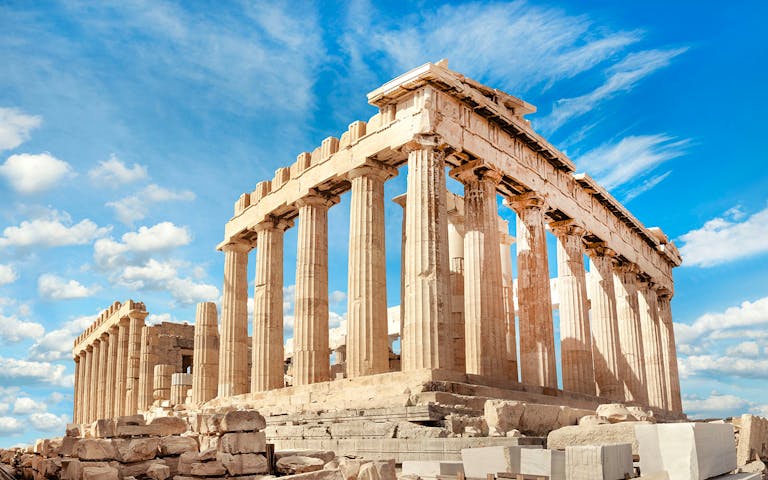
Two hours on the rock in a small group with a live guide, timed entry included. The one to take on a first visit: the Acropolis has almost no signage, so without a guide the Erechtheion is a handsome porch and nothing more.
The plain ticket with a booked slot and an app audio guide. The right buy for an 08:00 climb before the tour groups arrive, or for a second visit when you already know what you are looking at.
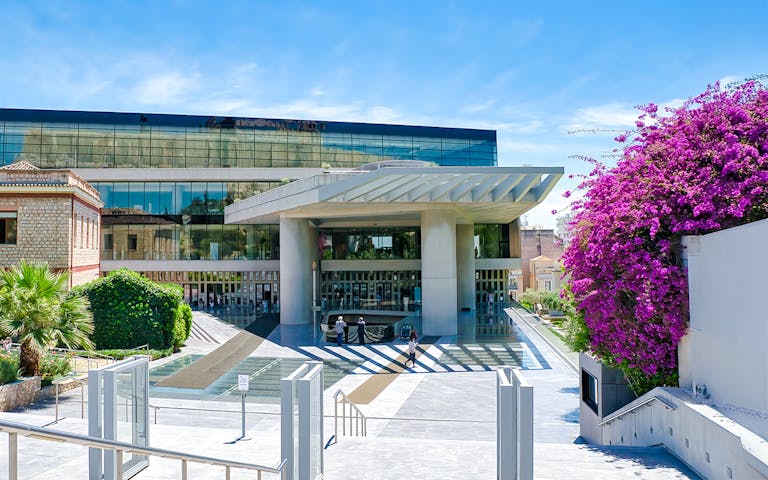
Acropolis Museum Skip-the-Line Ticket with Optional Audio Guide
★ 4.5 (10,831)
The plain ticket with a booked slot: straight in through the e-ticket entrance, then round the galleries at your own pace. An optional audio guide in several languages runs on your phone.
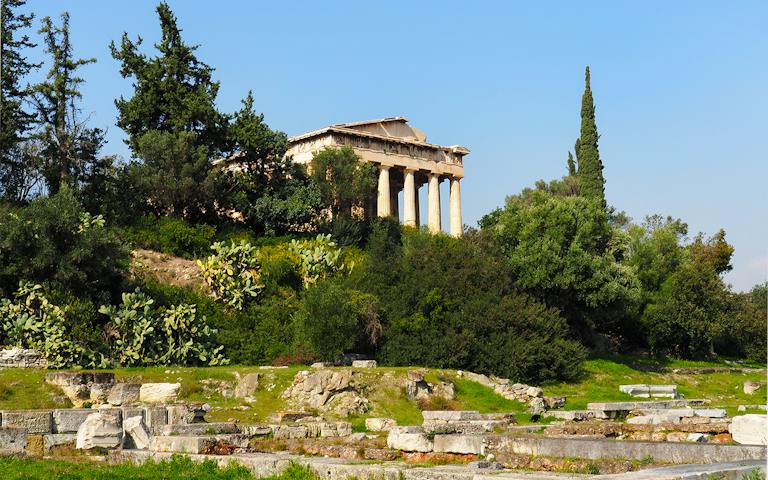
Entry to the site and the Agora Museum with an audio guide, self-paced. The cheapest way to have the place explained, and the Temple of Hephaistos is included at no extra charge.
We may earn a commission when you book through these links, at no extra cost to you.
Numismatic Museum Athens: coins, and Heinrich Schliemann's own mansion around them
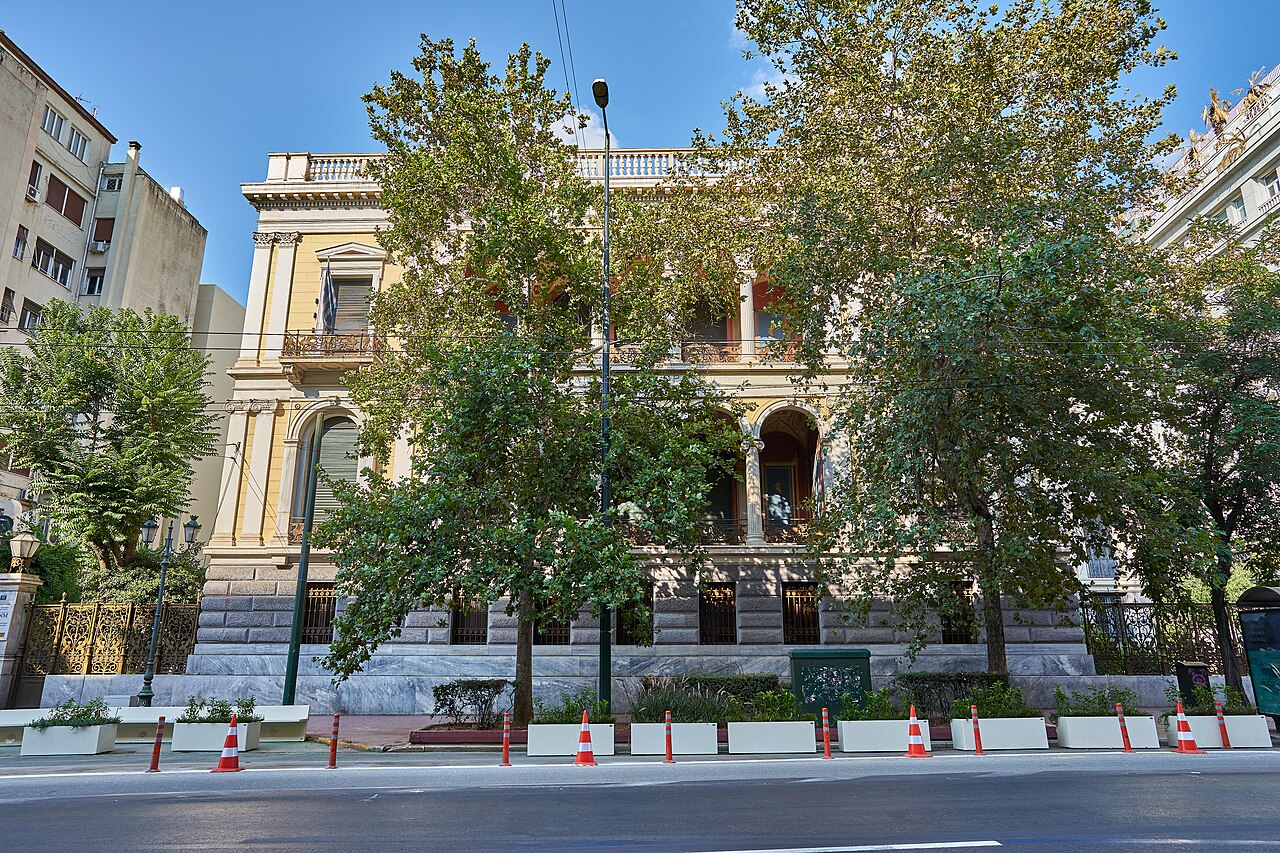
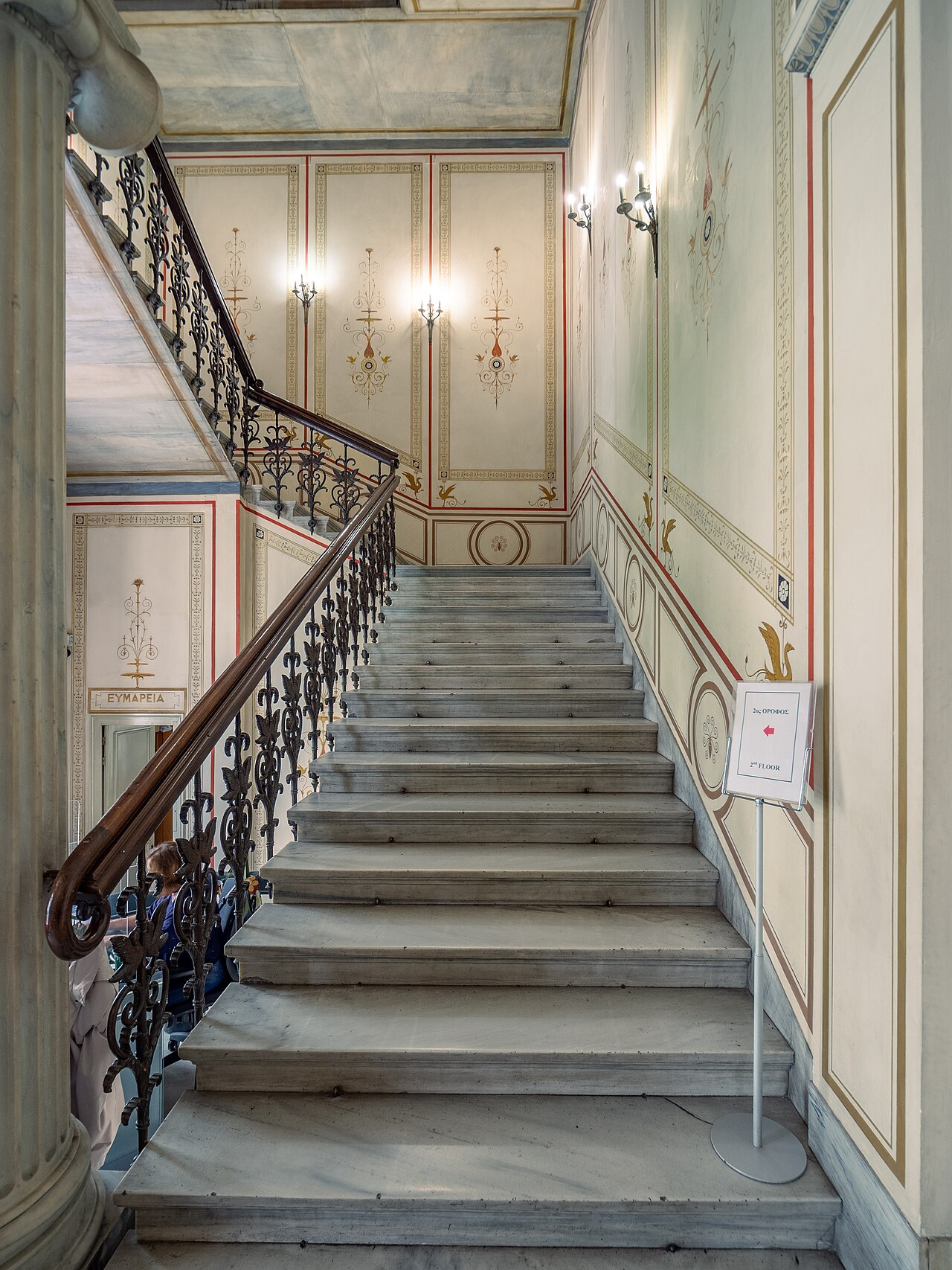
Reduced entry goes to EU citizens over 65, and a short list of professions enters free with documentation. What the €10 buys is the permanent exhibition on the first floor of Iliou Melathron, the neoclassical mansion that the architect Ernst Ziller built in 1878-1879 as the home of the archaeologist Heinrich Schliemann, and a collection the Ministry of Culture's museums directorate puts at about 500,000 coins, medals, lead seals, weights and seal rings, which it describes as the only museum of its kind in Greece.
The first floor runs from the die that struck Athenian silver tetradrachms to the last drachma before the 2002 euro changeover, and the question is whether what the Numismatic Museum Athens keeps in a Ziller mansion is worth an hour of a short trip. The museum publishes no suggested visit length, and we will not invent one. The exhibition occupies one floor of a house, which tells you more than a number would.
Guided tour or plain ticket?
Plain ticket, and a plain one at that. There is no partner guided tour of the Numismatic Museum and no partner entry ticket. Headout's page for the museum returns a page-not-found error, and its Athens museums category, which lists the Acropolis Museum, the National Archaeological Museum and the Museum of Illusions among others, has no Numismatic Museum product. GetYourGuide's own landing page for the museum links seven activities, and every one of them is a city walking tour or a private tour that passes the building on Panepistimiou Street. Not one is a ticket to go inside. A mythology walk that goes past Schliemann's front door is not a museum visit, and we do not list it as one. An older GetYourGuide listing for the museum could not be found live on the date of our check, so we do not name it or quote its price.
You get the permanent exhibition in the named rooms of the mansion: Heinrich Schliemann's Summer Office, given over to money and society across the ages. The Hall of the Hesperides, on the origins and manufacture of coinage, and the Dining Room, which holds the collections of the museum's major donors. What the ticket does not include is any priority over other visitors, because there is nothing to have priority over. We found no timed slots, no online-only allocation and no skip-the-line product from any seller. One caveat from the museum's own general-information page: when we checked, the exhibition hall the museum calls Money and Society was closed for maintenance work. The notice does not say which of the named rooms this affects or for how long, so if that theme is the reason you are going, ask on arrival.
On most of our museum pages the passes are the deciding question. Here they are not. The GetYourGuide "Athens: City Pass with Acropolis, Museums, HoHo & Transport" by Turbopass lists the Acropolis, the Acropolis Museum, the Herakleidon Museum, the two Kotsanas Museum locations, the Ilias Lalaounis Jewelry Museum, the Museum of Illusions, the Hellenic Motor Museum and the Athens War Museum. The Numismatic Museum is not on that list. The GetYourGuide Flex Pass offers a choice of 19 options, from the Acropolis and the National Archaeological Museum to a Delphi museum and a hop-on hop-off bus. The Numismatic Museum is not one of the 19. The Headout Turbopass Athens City Card names the Acropolis Museum, the Museum of Illusions and the Herakleidon "and more" without a full list, so we cannot say with certainty that the museum is excluded, only that it is not named anywhere we could see. Budget €10 separately whichever pass you hold, and take the pass for the sites it does include.
Tickets and prices
The Numismatic Museum Athens handles its own admission and publishes the reduced and free categories on its general-information page, checked in September 2026. There are no partner prices to compare them with, because no partner sells the ticket.
Two notes on the reduced ticket. First, the museum reserves it for European Union citizens over 65 and, at our check, still gave the validity window of 1 October 2025 to 31 May 2026. We did not find a newer figure, so ask on arrival what applies on your date. Second, the free list is professional rather than age-based: it names teachers, retired teachers, archaeologists, architects, conservators and holders of a Fine Arts degree, all on production of documentation. Bring the document, not just the claim. The museum's page does not list a child, student or disabled rate, and we will not assume one.
The free days come from the Ministry of Culture's Directorate of Archaeological Museums, whose page for this museum lists 6 March, 18 April, 18 May, 28 October, the last weekend of September for the European Heritage Days, and the first Sunday of each month from 1 November to 31 March. That is a generous calendar for a small museum, and the winter first Sundays are the easiest to plan around. One caution: our own project sources also mention a "first and third Sunday" rule for the 2026 Ministry list, but the only official page we found for this specific museum states the first Sunday only, with no third Sunday. Do not count on a third-Sunday free day here until you have checked the Ministry's current-year notice. If you turn up on one and it is not free, it is still a short and inexpensive visit.
Photo: George E. Koronaios / Wikimedia Commons
Opening hours and best time to visit
The Numismatic Museum Athens timetable is one of the simplest in the city. It opens Wednesday to Monday from 08:30 to 15:30, and the schedule is the same on both halves of the year: the museum gives 08:30 to 15:30 for 1 April to 31 October, and the Ministry directorate page gives the same 08:30 to 15:30 for 1 November to 31 March. There is no separate winter timetable to remember. Tuesday is the closing day. Visitors are admitted up to 20 minutes before closing, so the last entry is 15:10 on every open day.
Holiday closures are the standard Greek set: 1 January, 25 March, Orthodox Easter Sunday, 1 May and 25-26 December. Note that 25 March is a closing day here, not a free day, so do not plan the Numismatic Museum as a free-entry stop that morning. 28 October, by contrast, is on the free list and not on the closed list.
Best time to visit: this is a morning museum by design. With the doors shutting at 15:30 and the last admission at 15:10, the afternoon is not an option, and the 08:30 opening is early enough to take the first floor before the rest of your day begins. There are no timed slots here, so on a busy day in peak season the difference is fuller rooms rather than a wait to get in. Plan around the closing time, not the crowd. If a winter first Sunday suits your dates, the entry is free and the hours are the same 08:30 to 15:30.
Getting there
Getting to the Numismatic Museum Athens is simple. The address is Iliou Melathron, El. Venizelou (Panepistimiou) Street 12, postcode 10671, Athens. The mansion stands on Panepistimiou Street under its own name, Iliou Melathron, which the Ministry directorate translates as the Palace of Ilion. Ernst Ziller built it in 1878-1879 as Schliemann's residence. If you are navigating by phone, the coordinates are 37.9769, 23.7357.
By metro the museum's own page names Syntagma, on Lines 2 and 3, and nothing else. It does not give a walking time, so the figure is ours: about 5 minutes and roughly 350 metres up Panepistimiou Street from the square. For surface transport the museum lists trolley lines 2, 3, 4, 11 and 13 to the University stop. Access inside the building is better documented than at many Athens museums: the museum's page mentions a lift for visitors with mobility problems, and the Ministry directorate adds ramps, lifts and a disabled-accessible restroom.
The neighbours are the point of the location. By the walking times in our own data, the Benaki Museum is about 5 minutes away, the Museum of Cycladic Art about 10, the Temple of Olympian Zeus about 11 and the Acropolis about 12. That makes the Numismatic Museum the easiest add-on in the Syntagma end of the city: a half-hour to an hour on the first floor of the mansion, then a short walk to a museum that does need a booked ticket.
What to see: highlights
The house itself. Iliou Melathron is a neoclassical mansion built in 1878-1879 by Ernst Ziller for Heinrich Schliemann, and the exhibition uses its named rooms rather than a neutral gallery. The museum's Ancient Coins, Weights and Minor Art department, its Byzantine and Medieval Coins and Stamps department and its Modern Coins and Medals department all show on the one first floor.
The Hall of the Hesperides. This room explains the origins and manufacturing methods of coinage, and it is the place to see the die used to strike Athenian silver tetradrachms in the fifth century BC. Every Athenian tetradrachm in a case elsewhere started with a tool like this one.
Heinrich Schliemann's Summer Office. The museum gives this room to money and society across the ages. Check on arrival whether it is open: the general-information page carried a notice that the Money and Society hall was closed for maintenance when we looked.
The octadrachm of Ptolemy II. A coin of the Ptolemaic king who ruled from 285 to 246 BC, and one of the two named objects the museum singles out on its permanent-collections page. The other is the tetradrachm die above.
The hoards. The holdings include more than 190,000 coins from 670 documented hoards, buried and recovered as groups. A hoard tells you what a person carried and saved, which a single pristine coin cannot.
The Dining Room and the road to the euro. The Dining Room holds the collections of the museum's major donors, and the exhibition sequence runs from the birth and spread of Greek coinage and its symbolism, through Roman-era coins, the transition to Byzantine currency, Western and Eastern medieval coinage and the early modern gold and silver of the European trading powers, to Greek national currency from Ioannis Kapodistrias' first coinage of 1828, the drachma, and the 2002 euro changeover.
The collection as a whole runs to about 500,000 objects: coins, medals, lead seals, engraved gems, weights and obols, from the second millennium BC to the present. The museum's pages do not say how many cases you will find on the first floor, so treat the six points above as the spine of the visit.
Photo: C messier / Wikimedia Commons
Tips before you go
The practical facts the museum publishes are few, so here they are in full. There is a cafe or refreshment room and a museum shop on site. There is a lift for visitors with mobility problems, and the Ministry page adds ramps and a disabled-accessible restroom. Nothing on either page describes a cloakroom, a bag rule, a stroller rule or a photography policy, and we found none elsewhere in the sources we trust, so we cannot tell you whether cameras are welcome. Ask on arrival and follow the signs.
Bring documentation if you are claiming a reduced or free ticket. The reduced price is for EU citizens over 65, and the free list is by profession, so the documentation for the category you claim is what you will be asked for. Cash or card: the museum's page does not say, so carry both.
Watch the clock more than the heat at the Numismatic Museum Athens. The exhibition is indoors on one floor of a mansion, so summer affects only the walk from Syntagma. What catches people is the 15:30 close and the 15:10 last admission. Come in the morning, and do not plan it for a Tuesday, when the doors are shut.
One plan: Syntagma on Line 2 or 3, then about five minutes up Panepistimiou Street to the mansion. Bring the paper if you qualify for the reduced rate or free entry. Take the first floor in the museum's own order, from the Hall of the Hesperides and the tetradrachm die through the Roman, Byzantine and medieval coins to the drachma and the 2002 changeover, and look up at the rooms as much as down at the cases. Then walk five minutes to the Benaki, or ten to the Cycladic, for the museum that does need a ticket.
How to book, in four steps
Skip the ticket sites. There is no Numismatic Museum Athens ticket on Headout or GetYourGuide, and the museum is not in the GetYourGuide Turbopass or Flex Pass. Do not buy a pass for its sake. Save your advance booking for the Acropolis and the big museums, where the timed slot is what you are buying.
Pick a day, not a slot. Wednesday to Monday, 08:30 to 15:30, the same all year, Tuesday closed. Avoid 1 January, 25 March, Orthodox Easter Sunday, 1 May and 25-26 December. If a free day fits, the list is 6 March, 18 April, 18 May, 28 October, the last weekend of September and the winter first Sundays. Treat any third-Sunday claim as unconfirmed for this museum.
Arrive before 15:10 with your documents. Admission stops 20 minutes before closing. If you are over 65 with an EU passport, or on the professional free list, have the ID or the certificate ready, and ask whether the Money and Society hall has reopened.
Pair it with a neighbour that does need a ticket. The Benaki is about 5 minutes on foot, the Cycladic about 10, the Acropolis about 12. Book the timed ticket for that second stop in advance, and let the Numismatic Museum be the unbooked hour before it.
Nearby and combinations
The Numismatic Museum sits a few minutes from Syntagma Square, so it combines naturally with the collections nearby that do sell partner tickets. The Benaki Museum is about 5 minutes away and the Museum of Cycladic Art about 10, by the walking times in our data, and the Temple of Olympian Zeus and the Acropolis are about 11 and 12 minutes in the other direction. A morning of Schliemann's mansion and Ptolemy's octadrachm, then one booked museum in the afternoon, is a sound day at the Syntagma end of the city.
On passes, keep the two questions apart. Our Athens City Pass page sets out what the Turbopass City Pass and the GetYourGuide Flex Pass include and when they beat single tickets, and that page is relevant for the Acropolis, the Acropolis Museum and the bus. It is not relevant for this museum: the Numismatic Museum is on neither list, and the Headout Turbopass does not name it. If a pass makes sense for the rest of your trip, buy it for that rest, and add €10 at this door.
For the wider picture, our Best museums in Athens guide ranks the city's collections and suggests which sit well together in a day. The Numismatic Museum is on it as an unbooked €10 stop a few minutes from Syntagma. And if it is the modern rooms that hold you, from Kapodistrias' 1828 coinage to the last drachma, our National Historical Museum tickets page is the natural next read. The Numismatic Museum Athens is a house as much as a coin collection: Ziller's mansion for Schliemann, with money from the second millennium BC to the present laid out in its rooms, for €10 and no booking.
There is a reduced rate for EU citizens aged 65 and over. Teachers, retired teachers, archaeologists, architects, conservators and holders of a Fine Arts degree enter free with documentation.
What are the Numismatic Museum opening hours?+
08:30 to 15:30, Wednesday to Monday, the same all year with no summer or winter timetable. It closes on Tuesdays, and last admission is 20 minutes before closing, at 15:10.
Is the Numismatic Museum worth visiting for the building?+
That is the usual reason to go. The permanent exhibition occupies the first floor of the Iliou Melathron, Heinrich Schliemann's own mansion, built in 1878 and 1879 by the architect Ernst Ziller. The painted interiors, the Hall of the Hesperides and Schliemann's summer office are as much the exhibit as the coins.
What is in the Numismatic Museum?+
Coins and the making of them, arranged room by room: the origins and manufacturing methods of coinage in the Hall of the Hesperides, donor collections in the dining room, and pieces such as an octadrachm of Ptolemy II from 285 to 246 BC shown with a die used to strike coins.
Where is the Numismatic Museum?+
At 12 Panepistimiou Street, also written El. Venizelou, about five minutes on foot up from Syntagma station on Lines 2 and 3. It sits on the same stretch as the neoclassical trilogy of the Academy, the University and the National Library.
Is the Numismatic Museum free on any day?+
Yes, on the Ministry list: 6 March, 18 April, 18 May, 28 October, the last weekend of September, and the first Sunday of each month from 1 November to 31 March.
Every ticket in Athens, compared once.
18 museums and sites, plus day trips to Delphi, Meteora and beyond. Book in under a minute with free cancellation and instant confirmation.
 Bestseller