Things to do in Athens: how to plan a first visit
Things to do in Athens fall into a few clear groups: the Acropolis and the ancient sites around it, the city's museums, day trips to sites outside Athens, and a handful of practical tools (the hop-on hop-off bus, city passes) that help you cover more ground in less time. Each group below links to a full guide, with a short note on who each thing suits, so you can build an itinerary one decision at a time.
Start with the Acropolis and the ancient sites
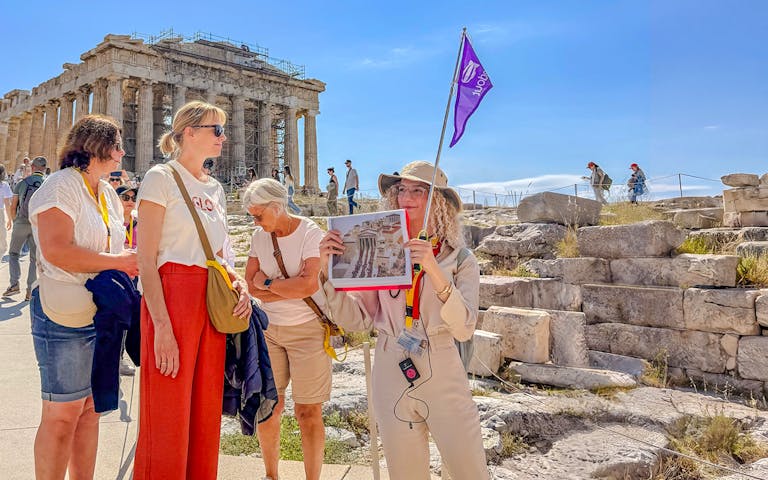
The Acropolis is the one stop almost every visitor puts first, and for good reason: the Parthenon, Erechtheion and Propylaia sit on a single hill you can cover in two to three hours, guided or on your own. Directly below it, the Acropolis Museum holds the sculptures and artefacts taken off the hill for preservation, including the original Caryatids, and pairs naturally with the same day. If you want to keep going, the Ancient Agora, the marketplace and civic heart of ancient Athens, is a short walk from either the Acropolis or Monastiraki metro station, and the Temple of Olympian Zeus sits close enough to visit on the same afternoon. Together these four sites cover most of what a first-time visitor pictures when they think of ancient Athens, and can be split across one full day or two more relaxed ones.
The museums: choose by interest
Athens has more good museums than any realistic trip fits in. The National Archaeological Museum is the single largest and most complete collection, covering the full span of Greek antiquity in one building, and is the right choice if you can only add one museum beyond the Acropolis Museum. From there, interest should drive the rest: the Museum of Cycladic Art for the minimalist marble figurines that influenced modern sculptors, the Benaki Museum for a broad sweep of Greek culture and history in one collection, the Byzantine and Christian Museum for icons and the period between antiquity and the modern state, or the Museum of Illusions if you are travelling with children who need an interactive break from ruins and glass cases. Our best museums in Athens guide ranks the full list against specific interests: art, history, families or a rainy day.
Day trips: when to leave the city for a day
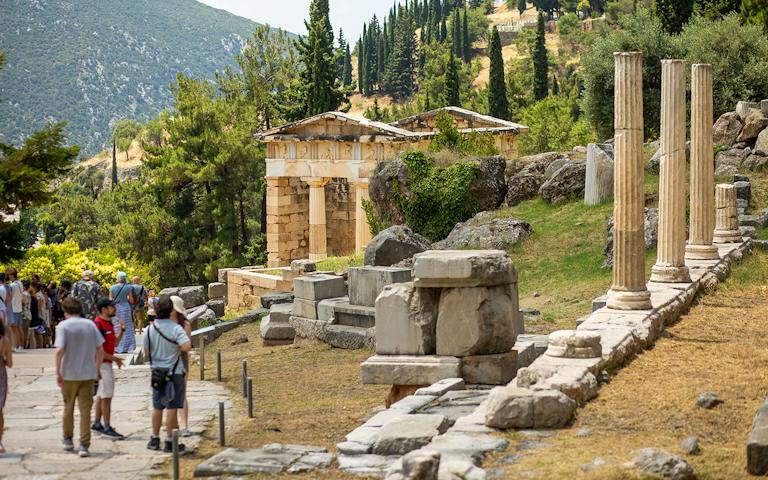
Once the city itself is covered, several sites within reach of Athens justify a full day out. Delphi, the sanctuary of the Oracle set into a mountainside above the Gulf of Corinth, is the best known and the one most visitors add first if they have a spare day. A guided round trip runs a full 10 hours once you count the drive each way, so it takes the whole day, start to finish. Our Athens day trips guide lays out which sites suit a single long day versus which ones need an overnight stay, and what a realistic day looks like once you count the drive there and back. Day trips are worth planning early in your stay rather than at the end, since they depend on an early departure and a full day, which is easier to protect before the rest of your itinerary fills in.
Best time of year to plan around
Athens runs hot and dry through July and August, and the Acropolis in particular has almost no shade, so a summer trip benefits from front-loading outdoor sites into the early morning and saving indoor museums for the hottest part of the afternoon. Spring and autumn keep milder weather with thinner crowds than peak summer, and winter, while cooler and with shorter daylight, means the shortest queues of the year at every site on this list, plus the seasonal free-Sunday dates that only run from November to March. Your travel dates come first, but if they are flexible, shoulder season gives the best balance of good weather and manageable crowds.
Budgeting your time and your money
A realistic first-time budget sets aside an entry ticket or guided tour for the Acropolis (from €39 for a timed ticket to €60 with a guide, on Headout), €26 to €35 for the Acropolis Museum, and smaller entry fees for whichever other museums make your list, most of which are inexpensive for a straightforward ticket. Day trips cost more because they include transport for a full day as well as admission, so give them their own line in your budget, apart from city museum tickets. Where a city pass or multi-attraction bundle is on the table, the test is to add up what the individual tickets would cost for exactly what you plan to see, and to buy the bundle only if it comes out cheaper for those sites, leaving out any included attraction you would skip.
Getting around: the hop-on hop-off bus and city passes
Two practical tools help if your time in Athens is short or you are covering ground beyond easy walking distance. The Athens hop-on hop-off bus loops past the major sites and neighbourhoods on a single ticket valid for 24, 48 or 72 hours, useful if you want an overview of the city's layout or are combining central Athens with the port area or the coast. The Athens City Pass bundles the Acropolis with a selection of museums and, depending on the version, the bus itself. It pays only if you would visit most of what it includes, so check the attraction list against your own plan before buying; a bundle is not automatically cheaper.
Practical logistics that shape the list above
Opening hours vary a lot across these things to do in Athens: the Acropolis keeps different summer and winter hours with no weekly closing day, while most museums close one day a week, commonly Monday or Tuesday, and keep shorter hours in winter than summer. Our Athens museums opening hours page collects the full schedule for every site on this list in one table, which is the fastest way to check that two things you want to see on the same day are both open. If keeping costs down matters, free museum days in Athens lists the specific dates several museums (and the Acropolis) drop admission for everyone, worth checking before you fix your travel dates if the schedule allows it.
A simple way to sequence a trip
For a two- or three-day visit, a workable pattern is: Acropolis and Acropolis Museum on day one, the National Archaeological Museum plus one or two smaller museums matched to your interest on day two, and either a day trip (if you have a fourth day) or the Ancient Agora, Temple of Olympian Zeus and a walk through the old town if you do not. Longer stays can add more museums from the list above or a second day trip. Shorter stays (a single free day) should prioritise the Acropolis and Acropolis Museum over anything else, since those two alone carry most of what people travel to Athens to see.
Travelling with children
Ruins and glass display cases hold a child's attention for a limited time, so a family itinerary benefits from alternating a heavy site (the Acropolis, the National Archaeological Museum) with something more interactive the same day or the next. The Museum of Illusions is built specifically for this, with hands-on rooms rather than cases to look at from a distance. The Hellenic Motor Museum, with more than 110 cars across three floors, works the same way for a slightly older child. Neither needs a full day on its own, so either pairs well as a lighter afternoon stop slotted in after a heavier morning at one of the larger ancient sites or museums above.
Where to go next
Each guide linked above covers ticket options, current prices and opening hours in full detail. Use the groups above to decide which things to do in Athens deserve a spot on a short trip, then open the guide for each one you keep. Start with the Acropolis guide if you have not booked anything yet, since almost every itinerary in this list builds outward from that one visit.
 Bestseller