Acropolis & Parthenon Guided Tour with Skip-the-Line Entry
★ 4.5 (9,110)
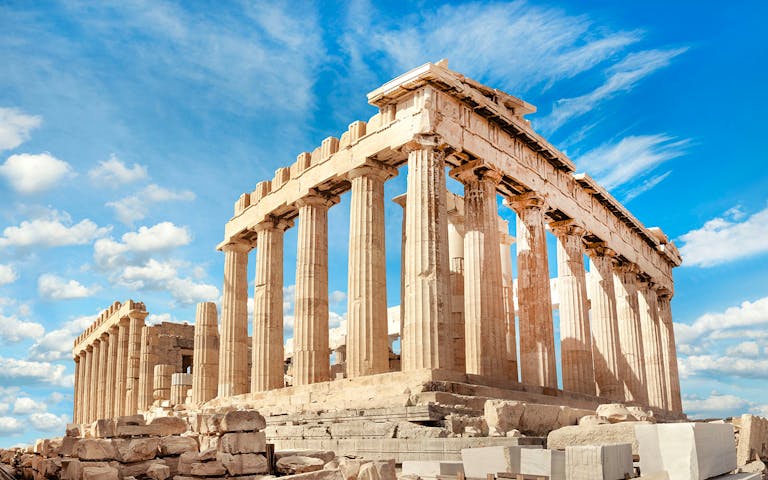
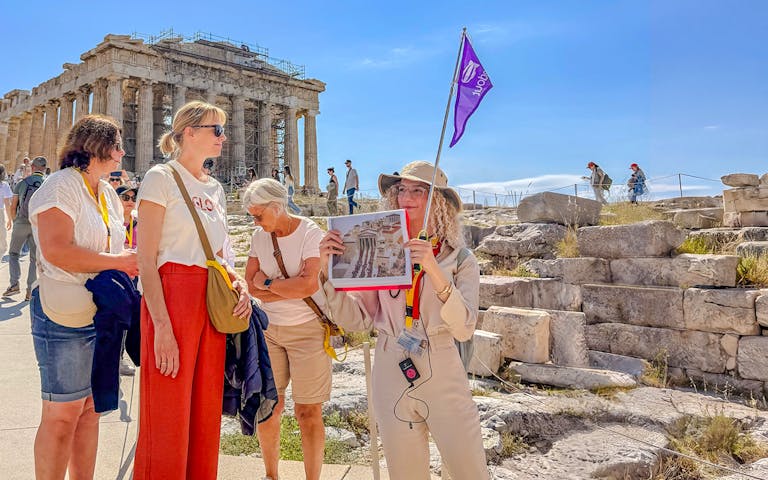
Two hours on the rock in a small group with a live guide, timed entry included. The one to take on a first visit: the Acropolis has almost no signage, so without a guide the Erechtheion is a handsome porch and nothing more.
The plain ticket with a booked slot and an app audio guide. The right buy for an 08:00 climb before the tour groups arrive, or for a second visit when you already know what you are looking at.
Acropolis Museum Skip-the-Line Ticket with Optional Audio Guide
★ 4.5 (10,831)
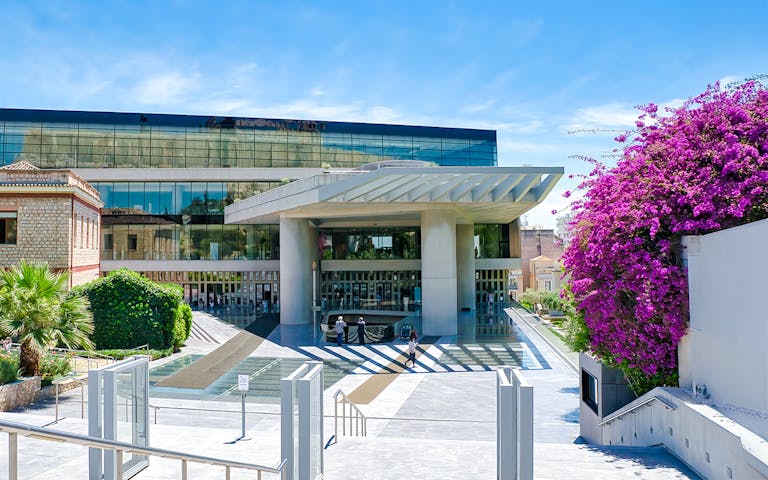
The plain ticket with a booked slot: straight in through the e-ticket entrance, then round the galleries at your own pace. An optional audio guide in several languages runs on your phone.
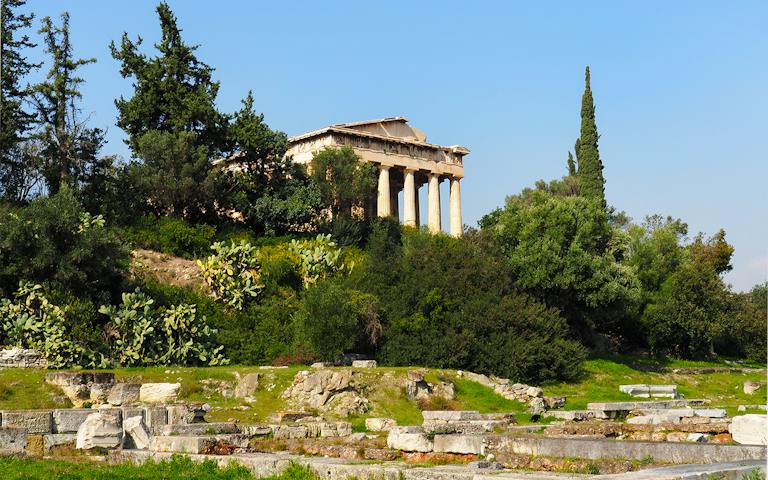
Entry to the site and the Agora Museum with an audio guide, self-paced. The cheapest way to have the place explained, and the Temple of Hephaistos is included at no extra charge.
We may earn a commission when you book through these links, at no extra cost to you.
Jewish Museum of Greece: what to know before you visit
The Jewish Museum of Greece holds more than 10,000 objects tracing almost two and a half thousand years of Jewish life in Greece, from the third century BCE to the twentieth century, in a collection built around a restored synagogue interior, a full Holocaust history level, and one of the country's few dedicated archives of Romaniote and Sephardic tradition. Right now the museum's own building is closed for renovation, but two temporary exhibitions, at two different venues in central Athens, keep the collection accessible in the meantime, and this page covers both of them plus what to expect once the main building reopens.
Right now: the main building is closed for renovation
The museum's home at Nikis 39, a short walk from Syntagma Square, is currently closed while it undergoes renovation, with no reopening date published yet. In the meantime, the museum has moved its programme to two temporary venues, both running now, which between them cover a current special exhibition and a curated presentation of the permanent collection. One of them sits inside the Benaki Museum, so a single afternoon covers both.
"Like Hunted Birds": Greek Jews after World War II
The museum's current exhibition, "Like Hunted Birds: Greek Jews After World War II", runs at the Bathhouse of the Winds, 8 Kyrrestou Street in Plaka, one of the venues of the Museum of Modern Greek Culture, from 25 May to 30 November 2026. Opening hours are 9:30 to 16:30, daily except Tuesday. The exhibition covers the period after the German, Italian and Bulgarian occupation ended, when survivors of the deportations returned to communities that had been destroyed, a chapter of Greek Jewish history that gets far less attention than the occupation years themselves. For visitor information or group bookings, the museum lists 2103244340 and 2103225582 as contact numbers for this venue.
The Jewish Museum of Greece at the Benaki Museum
A second collaboration, "The Jewish Museum of Greece at the Benaki Museum", runs from 20 June 2026 to 1 February 2027 at the Benaki Museum's own building, 1 Koumbari Street and Vasilissis Sofias Avenue, open daily except Tuesday. It is a curated selection from the Jewish Museum's holdings, presented inside one of Athens's major museums, so it is worth combining with a visit to the Benaki's own permanent collection on the same ticket and the same day. See our Benaki Museum guide for that museum's own hours and admission.
What the permanent exhibition normally covers
When the main building is open, the permanent exhibition is arranged over eight levels around a central skylight, each built around a theme rather than a strict chronology. The lowest level holds the restored interior of the old Romaniote Synagogue of Patras, dismantled after that community dissolved in 1981, displayed alongside Torah cases (Tikkim), Sephardic Scrolls of the Law and other synagogue textiles from across Greece's historic Jewish communities. Higher levels work through the Jewish holiday calendar as lived in Greece, then a History level covering military memorabilia and the Zionist movement, and an audiovisual room with short guided films for visitors who want the context explained before they see the objects themselves.
The Shoah level and the costume and life-cycle collections
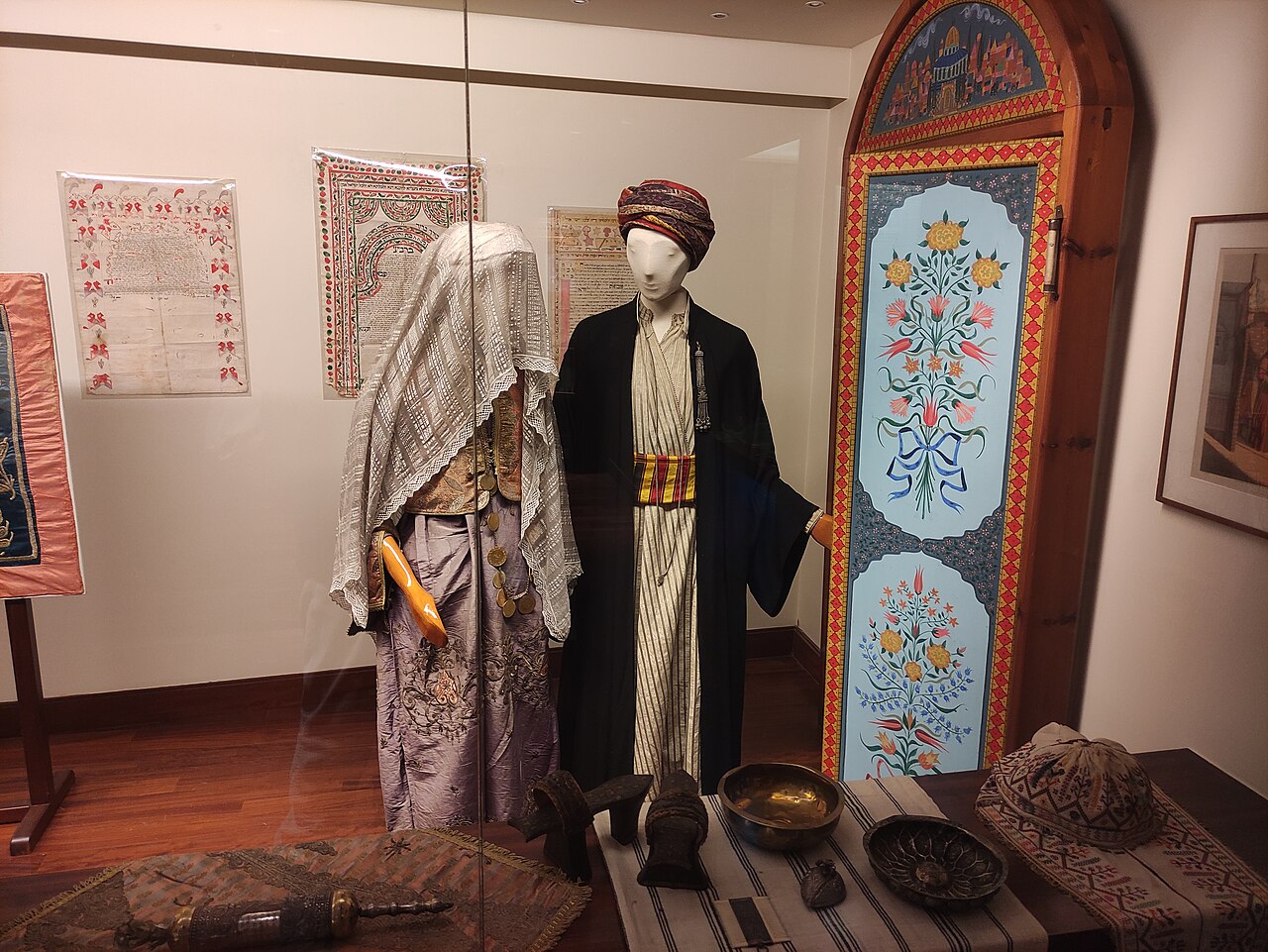
One full level is dedicated to the Shoah: documents, photographs and objects from the concentration camps trace the first measures against Greek Jews under occupation, the destruction of synagogues and homes, the deportations, conditions in the camps, and the participation of Greek Jews in the National Resistance through to Liberation. It is the most difficult part of the museum and also the part that gives the rest of the collection its full weight. A lighter level above it holds complete Romaniote and Sephardic costume ensembles and eighteenth-century engravings, and a further level covers the life-cycle rites (marriage, birth, coming of age) through embroidery, manuscripts and amulets, with two display cases specifically dedicated to the Jewish community of Crete, built around family heirlooms donated by the Kapon, Minervo and Albert families.
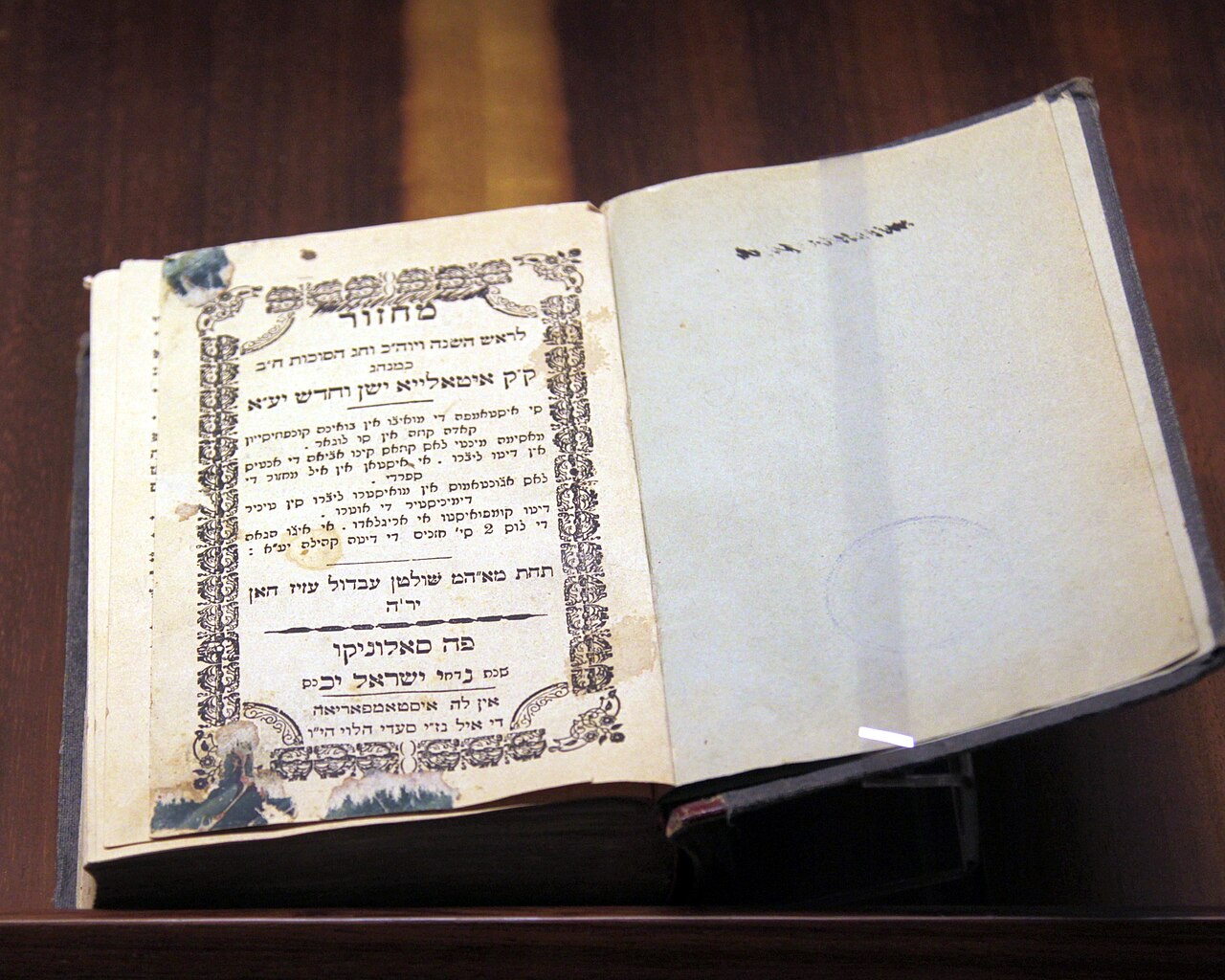
Photo: Nizzan Cohen / Wikimedia Commons
Two communities, one museum: Romaniote and Sephardic Greece
The collection tells the story of two distinct Jewish communities that developed on Greek soil over very different timelines. The Romaniote community traces back to antiquity, predating the Roman Empire in some accounts, and developed its own Greek-language liturgy and customs separate from either the Sephardic or Ashkenazi traditions found elsewhere in Europe. The restored Patras synagogue interior on the collection's lowest level is a Romaniote space. The Sephardic community arrived far later, after the 1492 expulsion from Spain, and settled heavily in Thessaloniki and other port cities, bringing Ladino, the Judeo-Spanish language, and its own liturgical and culinary traditions. The museum's costume, textile and religious-object collections present the two traditions separately, each through its own objects, and that separation is part of what makes the collection unusual among museums covering Jewish history in Europe.
Photo: Tilemahos Efthimiadis / Wikimedia Commons
Digital exhibitions and the online archive
Beyond the physical collection, the museum maintains a set of digital exhibitions that stay accessible regardless of the building's status. "Images of Greek Jews" draws on the museum's own photographic archive. "Synagonistis: Greek Jews in the National Resistance" documents Jewish participation in the wartime resistance movement, a theme that also runs through the physical Shoah level, and a further digital exhibition, built around the idea that "words must be hammered like nails," presents testimony and text-based material from the archive. None of these substitute for the physical Shoah level or the synagogue interior, but they open the museum's research and archival work to anyone, from anywhere, and a useful primer before a visit to either of the two temporary venues.
Opening hours and admission, for when the main building reopens
Under normal operation the museum charges a reduced rate for students and visitors over 65. A private or group guided tour, in English or Greek, for up to 25 people, needs an advance reservation. The museum closes on the standard Greek public holidays (New Year's Day, Epiphany, Clean Monday, 25 March, Easter Sunday and Monday, 1 May, Holy Spirit Day, 15 August, 28 October, Christmas Day and Boxing Day) as well as four Jewish holidays each year: Pesach, Shavuot, Rosh Hashanah and Yom Kippur, whose dates shift annually with the Hebrew calendar. None of this applies to the two temporary venues above, which run their own published hours.
For anyone who cannot visit in person, or wants to see the permanent collection before the building reopens, the museum offers a free virtual 360-degree tour online, built with three-dimensional views of selected objects from the collection.
Getting there
The museum building at Nikis 39 sits a three-minute walk from Syntagma metro station (Lines 2 and 3): exit toward Mitropoleos Street at the bottom of the square, and Nikis Street is the first turning off it. Tram Line 1, running between Zappeio and Neo Faliro, also serves the area. From the Syntagma tram stop, cross Amalia Avenue and Nikis is the second parallel street after Filellinon. The Bathhouse of the Winds venue sits inside Plaka, reachable on the same walk from Syntagma or from a stroll through the Plaka old town. The Benaki Museum venue is a short distance further out on Vasilissis Sofias Avenue, its own well-known address among Athens's major museums.
Why this museum earns a detour
Greece's Jewish history rarely gets a mention in a standard first-time itinerary built around the Acropolis and the big archaeological museums, which makes this collection one of the few places in Athens where that history gets told directly, in the words and objects of the communities themselves, where a wider Greek history would give it a footnote. The Shoah level in particular sets the museum apart from a general history museum: Greece lost close to the entirety of its Jewish population in Thessaloniki to deportation, and a smaller but still severe proportion of Athens's own community, a fact that most general accounts of the occupation years in Greece do not dwell on at length. Seeing it presented through the museum's own archive, alongside the same community's ordinary religious and domestic objects on the levels above and below, gives it a weight that a single paragraph in a general history book does not.
Tips before you go
Check which venue you want. The main museum is closed, so confirm you are heading to the Bathhouse of the Winds or the Benaki Museum, not the Nikis Street address, until a reopening date is published.
Both temporary exhibitions close on Tuesdays. Plan around that if a Tuesday is the only free day in your itinerary.
Combine the Benaki exhibition with the Benaki's own collection. Since the Jewish Museum's current Benaki showing sits inside that museum's building, one visit covers both.
Use the virtual tour to prepare. If your trip does not line up with either temporary venue's dates, the online 360-degree tour is a good substitute for seeing the permanent collection's layout, if not the objects themselves.
Budget more time than a quick stop. Between the synagogue interior, the Shoah level and the costume and textile collection, this museum needs an hour or more of your time, and a fifteen-minute pass-through on the way to somewhere else will miss most of it.
Nearby and combinations
For a full ranked list of what else is worth your time, including museums open right now with no renovation to work around, see best museums in Athens. For another collection built around Greek cultural and religious history and often mentioned alongside this one, see the Museum of Modern Greek Culture, whose main building sits a few streets away in the same corner of Plaka.
No, not at its main Nikis Street building, which is closed for renovation with no announced reopening date. Two temporary exhibitions substitute for it: "Like Hunted Birds" at the Bathhouse of the Winds in Plaka (25 May to 30 November 2026) and a showing inside the Benaki Museum (20 June 2026 to 1 February 2027).
How much does the Jewish Museum of Greece cost?+
No partner sells a ticket, so under normal operation you pay for admission at the museum, with a reduced rate for students and visitors over 65. A private or group guided tour in English or Greek, for up to 25 people, is booked with the museum in advance.
What is the difference between Romaniote and Sephardic Jews in Greece?+
Romaniote Jews trace their presence in Greece back to antiquity and developed a distinct Greek-language liturgy; Sephardic Jews arrived after the 1492 expulsion from Spain and settled heavily in Thessaloniki, bringing Ladino and their own traditions. The museum presents the two communities separately.
How do I get to the Jewish Museum of Greece?+
The main building at Nikis 39 is a three-minute walk from Syntagma metro station, Lines 2 and 3: exit toward Mitropoleos Street and Nikis is the first turning off it. Tram Line 1 also serves the area from the Syntagma stop.
What can I see at the Jewish Museum of Greece?+
The permanent exhibition, arranged over eight levels, includes a restored Romaniote synagogue interior from Patras, a full level on the Shoah and Greek Jewish participation in the National Resistance, Romaniote and Sephardic costume collections, and a section on the Jewish community of Crete.
Is there a virtual tour if I cannot visit in person?+
Yes. The museum offers a free 360-degree virtual tour online, built with three-dimensional views of selected objects from its collection, a good way to see the permanent exhibition's layout even if your trip does not line up with either temporary venue's dates.
Every ticket in Athens, compared once.
18 museums and sites, plus day trips to Delphi, Meteora and beyond. Book in under a minute with free cancellation and instant confirmation.
 Bestseller