The sunset tour, what it includes, and why this trip has to be timed around sunset.
Tickets and tours
How to book Cape Sounion
Temple of Poseidon and Cape Sounion Sunset Tour from Athens
★ 4.5 (2,044)
A half-day coach trip timed for sunset: return transfer from central Athens, the temple's entry ticket handed out on the way, and audio commentary along the coast road.
Cape Sounion tickets: the temple, the sunset, and why the two are the same trip
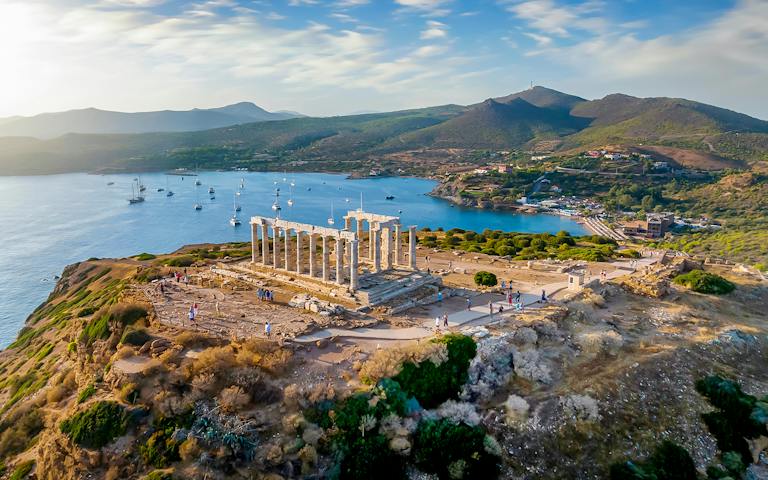
Cape Sounion tickets are the rare case where the official opening hours and the reason to go are the same thing. The Temple of Poseidon closes at sunset, not at a fixed clock time, because the site is built around the same view that draws everyone here in the first place: an ancient Doric temple on a cliff at the southern tip of Attica, with the Aegean on three sides and nothing to interrupt the horizon. Below are the admission price, what the partner sunset tour includes, how it compares with getting there under your own power, and how to time the trip so you are standing at the temple for the part of the day it was designed to be seen in.
The Headout sunset tour bundles the return transfer and the entry ticket from €26, so you reach the cape for sunset without driving the coast road or timing the last bus back. Either way, the point of the trip is arriving with enough daylight left to watch the sun go down.
What is included
The Headout sunset tour is a coach trip: a return transfer from central Athens, the temple's entry ticket handed to you during the drive rather than bought separately on arrival, and audio-guided commentary about the coastline and the sites you pass on the way down, in the tour bus itself rather than at the temple. Several travellers have noted there is no separate audio guide device at the temple; the commentary covers the journey, and what you do at the site itself is walk the ruins and watch the light change. The tour runs about 5 hours door to door, with roughly an hour to an hour and a half at the temple. Food and drink are not included, and pick-up times have shifted for some travellers close to departure, so confirm your exact meeting time the day before departure, whatever the original booking confirmation says.
Itinerary and timing
The drive down the Athens Riviera takes about an hour each way along the coast road, with the sea visible for most of it. Because the tour is timed for sunset rather than a fixed departure, the pick-up time moves through the year: later in summer, when sunset is after 8pm, earlier in winter, when it can be well before 6pm. That is also true of the site's own official hours, which run 09:30 until sunset in both winter and summer, with last entry 20 minutes before closing. There is no fixed visit length published by either the Ministry or the tour operator; budget an hour to walk the temple platform and the surrounding site properly, more if you want to sit and watch the sunset itself rather than photograph it and move on.
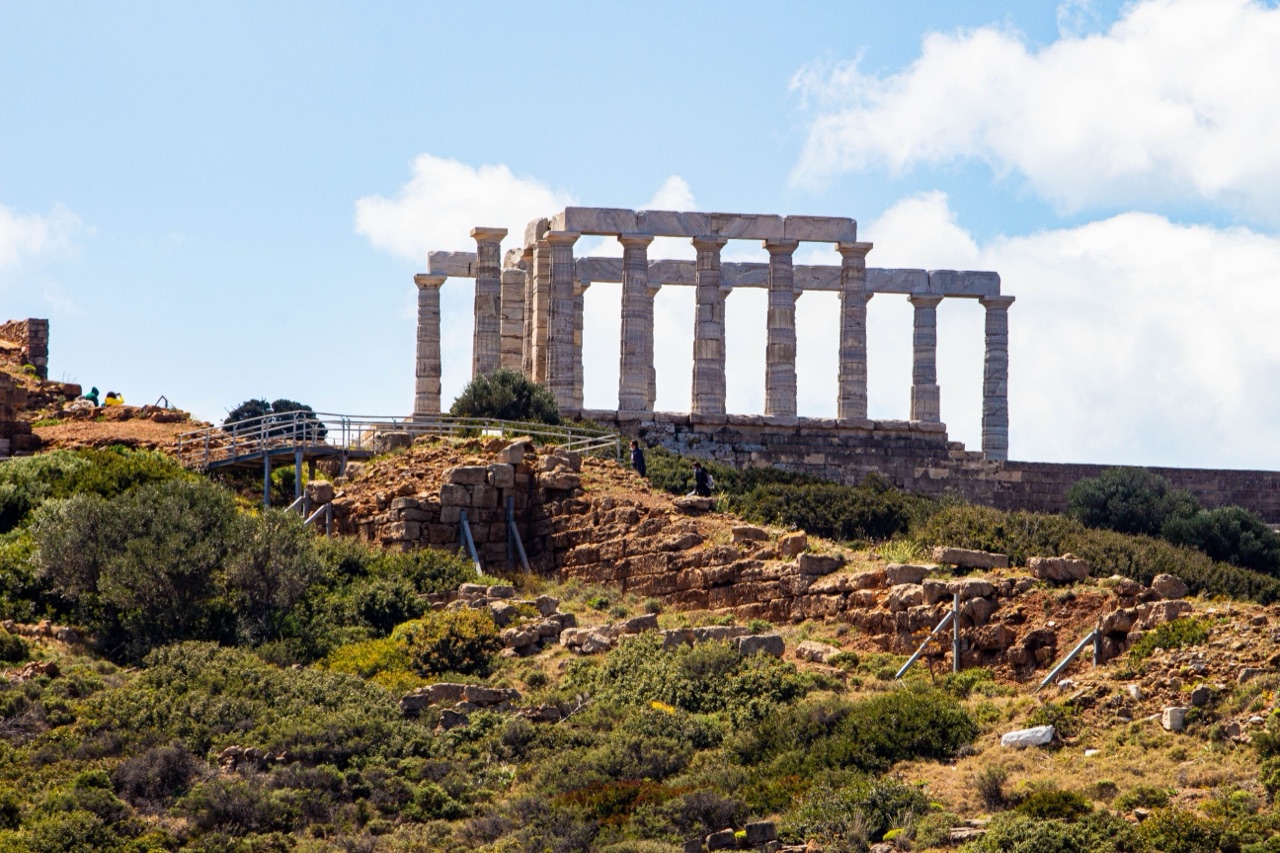
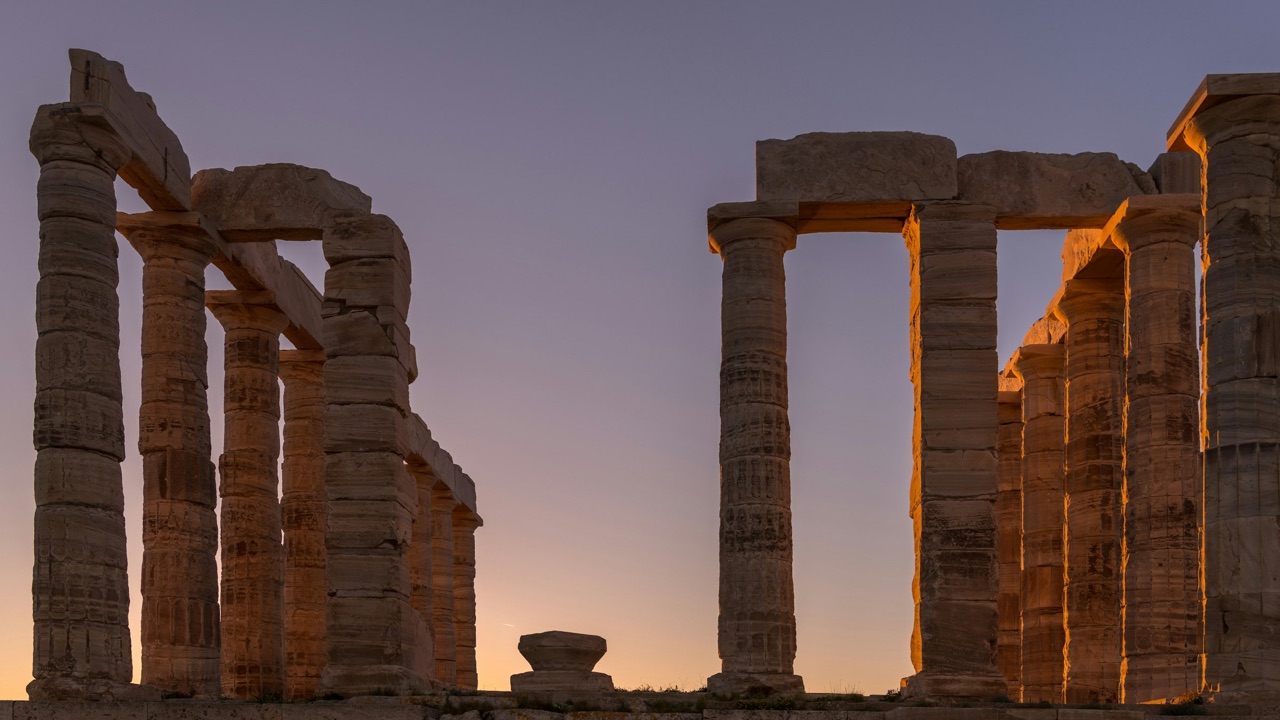
The temple was completed around 444 to 440 BC, the same building period as the Parthenon and the Temple of Athena Nike on the Acropolis, and the surviving Doric colonnade is what most photographs of the site show: white marble columns against the sea, with almost nothing else built up on the headland to compete with them. One column reputedly carries Lord Byron's name, carved into the marble on an earlier visit, a well-known visitor story rather than a Ministry-confirmed detail, and worth looking for, though you should not expect a sign pointing to it.
The headland carries its own mythology, and it is worth knowing before you stand on it. Aegeus, king of Athens and father of the hero Theseus, is said to have watched from this cliff for his son's ship returning from Crete after Theseus had gone to kill the Minotaur. The agreed signal was a change of sail colour, white for success, black left up by mistake. Theseus forgot to switch the sails, Aegeus saw black from the headland, assumed his son was dead, and threw himself into the sea below, which has carried his name, the Aegean, ever since. Whether or not you take the story literally, it is the reason a temple to Poseidon, god of the sea, sits on precisely this headland: sailors leaving or entering the Saronic Gulf would have seen it as one of the last or first things visible from the water, a landmark and a dedication at once.
The reduced rate and free-admission categories follow the same Ministry list as every other state site: EU citizens up to 25, non-EU children up to 18, visitors with a 67 percent disability plus one escort, and EU/EEA school groups enter free with ID, and the site is free to everyone on 6 March, 18 April, 18 May, the last weekend of September, 28 October, and every first and third Sunday from 1 November to 31 March. It closes on 1 January, 25 March, 1 May, Easter Sunday, 25 and 26 December, opens 12:00 to 17:00 on Good Friday and 09:30 to 15:30 on Holy Saturday.
Photo: Nikolaos D. Nomikos / Pexels
Getting there without the tour
A public bus (the KTEL Attikis coastal line) runs from central Athens to Sounion along the same coast road the tour takes, roughly an hour and a half depending on traffic and stops, with tickets bought on board or at the terminal rather than in advance. It runs on a fixed timetable that ignores sunset, so the practical difficulty is timing the return: the last bus back does not adjust itself to whenever the sun happens to set that evening, and missing it after dark from a headland with limited onward transport is the scenario the paid tour is built to avoid. Driving yourself removes that constraint entirely, at the cost of navigating an unfamiliar coast road toward dusk, when the light that makes the drive scenic in the afternoon works against you on the way back.
Is it worth it?
If you have a car or are comfortable timing the public bus carefully, a plain entry ticket on the day is enough, and you control your own pace around sunset rather than sharing it with a coach group. The tour earns its extra cost on convenience: no driving the coast road at dusk, no working out the bus timetable back to Athens in the dark, and a booked seat on the return leg after sunset when public transport options thin out. Skip the tour if you already have wheels of your own and want your own pace. Book it if getting back to central Athens safely after dark, on a schedule you do not have to plan yourself, is the part of this trip you would rather not manage.
Tips
Dress for wind. The headland is exposed on three sides, and even a warm Athens afternoon is noticeably cooler and breezier at the temple, especially once the sun is going down.
Arrive with time to walk the whole site, not just the temple platform. The colonnade is the photograph everyone takes, but the wider headland rewards a slower walk before the light goes.
Confirm your pick-up time close to departure. Sunset-timed tours shift their exact start time through the year, and at least one recent traveller reported a later start than originally booked.
Bring water. There is little shade on the headland and the site closes at sunset, with no indoor space to cool down in.
Charge your phone before you leave Athens. Between the coastal drive, the temple itself and the sunset, most visitors take more photos here than at any other single stop on a typical Athens trip, and there is nowhere to charge a device on site.
Photo: George Desipris / Unsplash
How to book, in four steps
Decide on transport first. Driving or taking the bus yourself: you only need an entry ticket for the site. No car, or want the return trip handled for you: book the sunset tour.
Book with free cancellation. The Headout tour cancels free up to 24 hours before departure, so a date you are not fully sure of costs nothing to hold.
Check the season's sunset time before you fix a date. A winter trip means an earlier pick-up and an earlier return to Athens than a summer one.
Pair it with the coast, not with a second inland trip the same day. The point of this trip is the drive and the headland, so leave Delphi and Meteora for other days.
What the ticket does and does not cover
Both the on-site ticket and the Headout tour's bundled entry cover the same thing: access to the temple platform and the wider headland, nothing else. There is no separate museum building at Sounion the way there is at the Acropolis, no indoor exhibition to add to the visit, and no audio guide device issued on arrival even on the paid tour. What you are paying for, either way, is entry to an outdoor site with one monument on it, seen at a specific time of day and with no collection of finds to go with it.
Combine it with
Cape Sounion is one of several Athens day trips that leave the city for an afternoon or a full day; if a longer inland trip suits your dates better, the Delphi day trip page covers the other classic option, a full day rather than a half day, with a very different kind of ancient site at the end of it. Book Cape Sounion for an evening departure and you can still spend the rest of the day at the Acropolis, the same architectural period as the temple you are travelling to see at sunset. A typical plan, then: a full day in the city, a coach south along the coast in the late afternoon, and Cape Sounion tickets that put you on the headland for the one part of the day the site was built to be seen in.
The Headout sunset tour, which bundles a return coach transfer with the entry ticket, starts from €26. If you make your own way there, you buy the entry ticket at the site.
What time does the Temple of Poseidon close?+
At sunset, in both winter and summer, with last entry 20 minutes before closing. There is no fixed clock time; the exact hour moves earlier in winter and later in summer.
Is the Cape Sounion sunset tour worth it over driving yourself?+
Mainly for convenience: no coast-road driving at dusk and no working out the return bus timetable in the dark. If you already have a car or are comfortable with public transport, a plain entry ticket at the site lets you set your own pace.
How long does the Cape Sounion day trip take?+
The Headout sunset tour runs about 5 hours door to door from central Athens, with roughly an hour to an hour and a half at the temple itself.
Is there an audio guide at the Temple of Poseidon?+
The Headout sunset tour includes audio commentary during the coach journey along the coast, not a separate on-site audio guide device at the temple. Several travellers have noted this distinction.
When was the Temple of Poseidon built?+
Around 444 to 440 BC, the same building period as the Parthenon and the Temple of Athena Nike on the Acropolis.
One headland, one sunset.
Book the coach and let someone else drive the coast road home after dark, or buy a plain entry ticket and go it alone.